

An Iranian source has told The New York Times that Tehran is fuming at Oman, after Oman allowed naval vessels to move transverse an alternate route through the Strait of Hormuz, without coordinating with the IRGC.
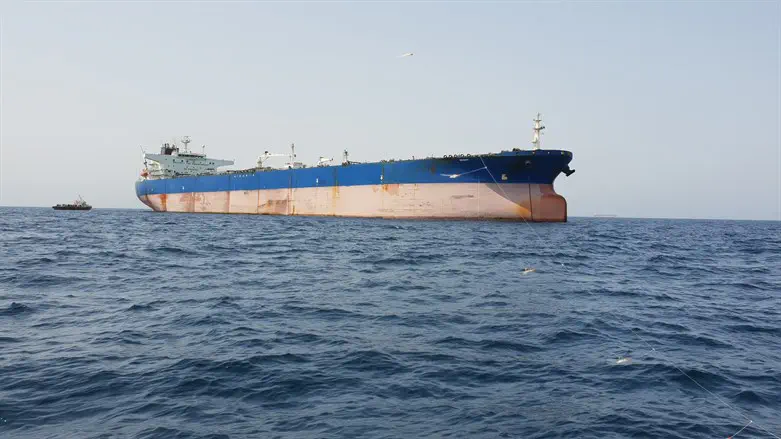
In response, Iran launched a UAV towards a ship in the Strait, in order to harm the passage and completely halt naval traffic in the area.
According to the source, Oman is under pressure from the US, which demands free passage, as well as from Iran, which is demanding to control the routes. Iran has warned that Oman cannot provide ships any security commitments without Tehran's approval, and that they will not allow any external body to interfere in their control of the Strait of Hormuz.
On Tuesday, in cooperation with the International Maritime Organization (IMO), the Sultanate of Oman announced an interim shipping route designed for commercial boats navigating through the strategic Strait of Hormuz.
The state-run Oman News Agency (ONA) reported that this provisional corridor is accessible to all maritime traffic. Vessel operators must align their voyages directly with the international shipping regulator, following explicit navigational coordinates provided jointly by the IMO and Omani maritime regulators.
The announcement came hours after Oman and Iran reaffirmed what they described as their sovereignty and sovereign rights over the Strait of Hormuz in a joint statement issued following talks in Muscat between senior officials from the two countries.
However, on Thursday, elements of Iran’s Islamic Revolutionary Guard Corps targeted a commercial cargo vessel flying the Singapore flag within the strategic Strait of Hormuz. Citing two senior American officials, The Wall Street Journal reported that the assault inflicted significant damage on the ship’s bridge, though no injuries or fatalities were reported.
Concurrently, a regulatory Iranian state body known as the Persian Gulf Strait Authority (PGSA) issued a strict warning regarding maritime lanes on Thursday.
The agency, which holds an official mandate to supervise and govern transit through the chokepoint, announced that any vessels traveling via routes outside its designated framework will be stripped of safe-passage assurances, liability arrangements, and insurance protections.