


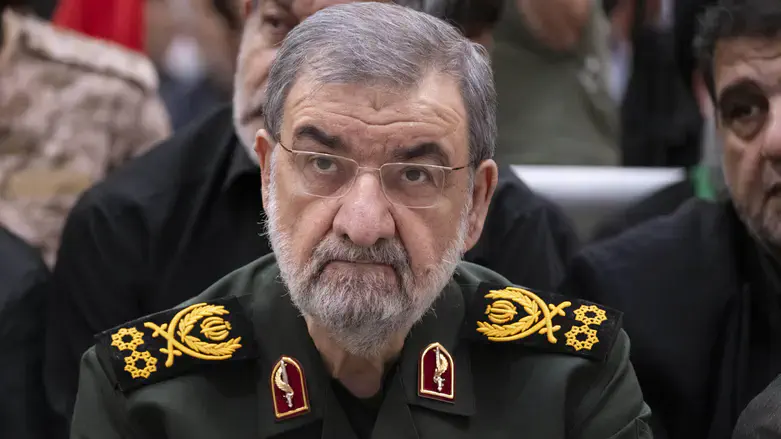
Iran's newly appointed Supreme National Security Council Secretary, Mohsen Rezaei, declared Tuesday that Tehran will not restore access through the Strait of Hormuz unless Washington accedes to the Islamic Republic's demands.
"The Strait of Hormuz will not open until the United States changes its behavior and accepts Iran's conditions," Rezaei stated, as reported by Iran's official IRIB news service.
Elaborating on Tehran's requirements, Rezaei specified, “The United States must end the war, release Iran's blocked funds, and in general, the war must end throughout the region, including Lebanon and Gaza, and other conditions that have been conveyed through intermediaries."
He further clarified that bilateral arrangements regarding shipping channels do not equate to lifting the overall transit shutdown.
“If an agreement is reached between Iran and Oman regarding the passage route in the Strait of Hormuz, this agreement will be separate from the issue of closing the Strait of Hormuz," stated Rezaei.
Rezaei was named Secretary of the Supreme National Security Council on Sunday. The 71-year-old former Commander-in-Chief of the Islamic Revolutionary Guard Corps (IRGC) led the military branch from 1981 through 1997, spanning nearly the entire Iran-Iraq War. Following his tenure in uniform, he assumed various prominent political roles before becoming a military adviser to Supreme Leader Ayatollah Mojtaba Khamenei.
Recognized for his hawkish rhetoric toward the United States, Rezaei warned last month that persistent American airstrikes would force Iranian forces into an "offensive and destructive" posture, insisting that pursuing "both war and negotiation" is no longer viable.
He additionally cautioned that continued US military action would prompt Iranian forces to expand beyond retaliatory measures, removing protections for US personnel and bases regardless of international borders - threats he similarly articulated in late April.
Rezaei has repeatedly expressed skepticism regarding diplomatic efforts, alleging Washington intends to undermine negotiations between both countries.
“The US is seeking to pass its warships through the Strait of Hormuz. In practice, the US is acting in a way that undermines agreements," Rezaei charged, adding, “Those within Iran who oppose negotiations must be patient - the US will sabotage the talks themselves; it is clear they will cause the negotiations to fail."
His latest declarations arrive amid escalating friction over the strategic chokepoint, which Iranian authorities closed completely following joint US-Israeli military strikes on February 28. In response, Washington imposed a naval blockade against Iran.
Although both nations signed an interim 60-day memorandum of understanding in June to temporarily pause the blockade in exchange for unhindered merchant shipping, American forces reinstated the maritime embargo last month following renewed military skirmishes and attacks on commercial vessels across the region.
US President Donald Trump was asked by a reporter on Monday about his previous comments warning that the current negotiations with Iran represented its final chance before "decapitation," and was pressed on what comes next.
“You’ll find out," Trump replied. Asked whether a massive escalation remains on the table, Trump added, “Well, we certainly have that ability if we want to do that. You’ll find out."