

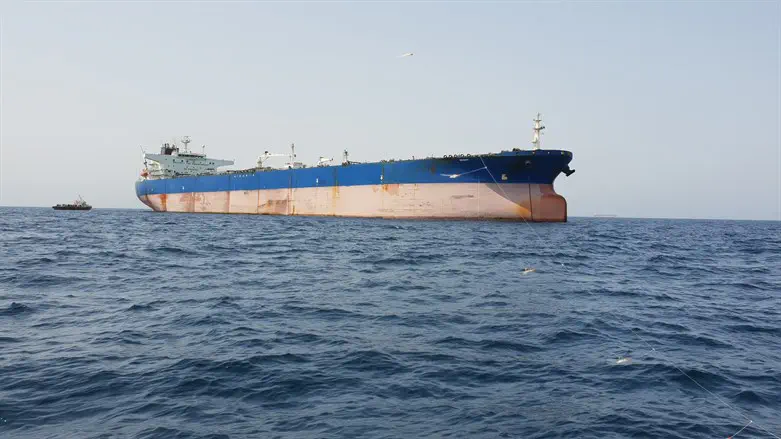
On Thursday, elements of Iran’s Islamic Revolutionary Guard Corps targeted a commercial cargo vessel flying the Singapore flag within the strategic Strait of Hormuz. Citing two senior American officials, The Wall Street Journal reported that the assault inflicted significant damage on the ship’s bridge, though no injuries or fatalities were reported.
Concurrently, a regulatory Iranian state body known as the Persian Gulf Strait Authority (PGSA) issued a strict warning regarding maritime lanes on Thursday.
The agency, which holds an official mandate to supervise and govern transit through the chokepoint, announced that any vessels traveling via routes outside its designated framework will be stripped of safe-passage assurances, liability arrangements, and insurance protections.
Addressing what it described as multiple inquiries, the authority clarified that alternative routing constitutes an unauthorized voyage falling entirely outside its safety net. Consequently, the PGSA declared that the legal and physical ramifications of utilizing these unapproved channels rest strictly with the vessel's captain, owner, and operator.
The escalating maritime turmoil prompted an immediate response from the United Nations' shipping body. The International Maritime Organization (IMO) enacted a temporary halt to its emergency evacuation mission for stranded vessels in the Persian Gulf, citing the attack in Hormuz and stating a critical need to reevaluate regional safety protocols before resuming operations.
Prior to this pause, several cargo carriers had already been successfully escorted out of the area earlier in the week through a joint initiative involving the maritime sector and various member states.
IMO Secretary-General Arsenio Dominguez explained that the extraction strategy was being put on hold, stating his decision was made “to reconfirm that the necessary safety guarantees continue to be in place for the ships on our evacuation list and all those in the region."
Dominguez acknowledged receiving reports about the strike in the Gulf of Oman, noting that while the targeted ship had traversed the Strait of Hormuz, it was not participating in the official UN mission. Even so, he emphasized that "the safety of the seafarers remains paramount."
To address the fluctuating security situation, he concluded, “To ensure a coordinated approach and navigational safety, the evacuation plan will be paused until further clarity is obtained."
Oman and the IMO announced earlier this week an interim shipping route designed for commercial boats navigating through the strategic Strait of Hormuz.
The announcement came hours after Oman and Iran reaffirmed what they described as their sovereignty and sovereign rights over the Strait of Hormuz in a joint statement issued following talks in Muscat between senior officials from the two countries.
The statement was released following the visit of Iranian Parliament Speaker Mohammad Bagher Ghalibaf and Foreign Minister Abbas Araghchi, who met with Sultan Haitham bin Tarik and Omani Foreign Minister Sayyid Badr Albusaidi.
Referring to the Strait of Hormuz, the statement said that Oman and Iran, "as the Coastal States of the Strait of Hormuz, reaffirm their commitment to the safe passage through the Strait, in line with applicable international law, while emphasizing their sovereignty and sovereign rights over their territorial waters in the Strait of Hormuz."