

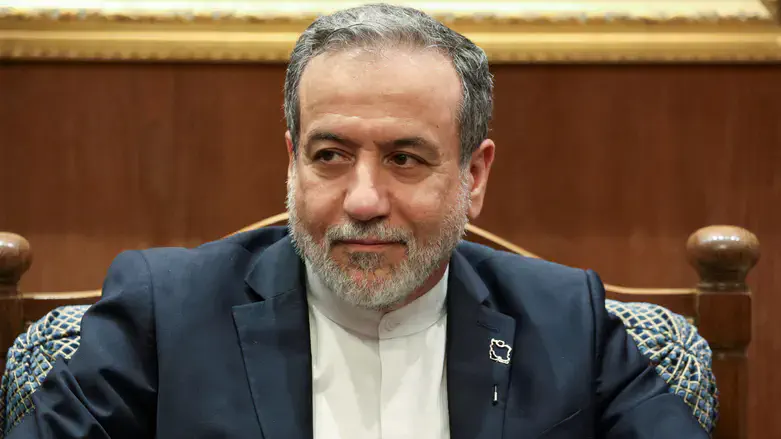
Iran’s Foreign Minister, Abbas Araghchi, on Sunday arrived in Geneva, leading a diplomatic and technical delegation for the second round of indirect nuclear talks with the United States.
This round, scheduled for Tuesday, will involve Omani mediation and aim to continue discussions suspended since the war between Iran and Israel last June.
In a statement quoted by France24, Iran's Foreign Ministry confirmed Araghchi's departure, detailing that during his visit to Geneva, he would meet with Swiss and Omani officials, as well as Rafael Grossi, the head of the International Atomic Energy Agency (IAEA), and other international diplomats.
The nuclear talks between Iran and the US resumed in Muscat on February 6, following months of stalled negotiations. These talks have been surrounded by uncertainty, particularly regarding Iran’s stockpile of over 400 kilograms of 60 percent enriched uranium, which was last monitored by nuclear inspectors in June.
On Sunday, an Iranian diplomat said Iran is seeking a nuclear agreement with the United States that would provide economic gains for both countries.
As preparations for talks continue, the US has also increased its military presence in the Middle East.
On Friday, senior officials in the Trump administration told the New York Times that President Donald Trump has not yet decided whether he would strike Iran.
Three US officials told the newspaper that the options Trump has been weighing include military action targeting Iran’s nuclear program and ability to launch ballistic missiles.
The President is also considering options that would include sending American commandos to go after certain Iranian military targets, the officials said.
On Friday, Trump was asked by reporters about his decision to deploy the USS Gerald R. Ford aircraft carrier to the Middle East, in addition to the USS Abraham Lincoln which is already in the region.
The aircraft carrier was sent “in case we don't make a deal, we'll need it. If we don't have a deal, we'll need it. We have one out there that just arrived. If we need it, we have it ready. A big, a very big force," said Trump.
Asked how confident he is that the negotiations with Iran will be successful, the President replied, “I think they'll be successful, and if they're not, it's going to be a bad day for Iran, very bad."