

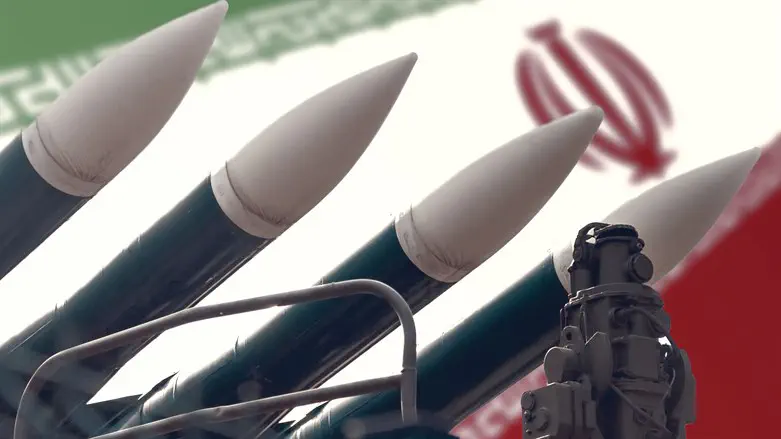
Iran is seeking a nuclear agreement with the United States that would provide economic gains for both countries, an Iranian diplomat said on Sunday, just days before a second round of discussions between Tehran and Washington.
According to Reuters, the renewed negotiations aim to address the long-running dispute over Iran’s nuclear program and prevent further military escalation. US officials told Reuters that Washington has sent a second aircraft carrier to the region and is preparing for the possibility of an extended military campaign should the talks fail.
US Secretary of State Marco Rubio said at a press conference in Bratislava that President Donald Trump prefers a diplomatic resolution, though he acknowledged that a deal is not guaranteed.
"No one's ever been able to do a successful deal with Iran, but we're going to try," Rubio said.
Despite previous threats to target US bases in the Middle East if attacked, Tehran adopted a more conciliatory tone on Sunday. The semi-official Fars news agency quoted Foreign Ministry deputy director for economic diplomacy Hamid Ghanbari as saying that for any agreement to be sustainable, the United States must also see significant and rapid economic benefits.
Ghanbari stated that areas under discussion include cooperation in oil and gas, shared energy fields, mining investments, and aircraft purchases. He argued that the 2015 nuclear agreement did not secure sufficient economic interests for the United States.
In 2018, President Trump withdrew the US from the 2015 pact, which had provided sanctions relief in exchange for limits on Iran’s nuclear activities, and reinstated stringent economic sanctions on Tehran.
A source told Reuters on Friday that a US delegation, including envoys Steve Witkoff and Jared Kushner, would meet Iranian officials in Geneva on Tuesday. A senior Iranian official later confirmed the planned meeting to Reuters on Sunday.
Rubio said Witkoff and Kushner were traveling for what he described as important meetings, without elaborating.
Unlike the multilateral negotiations that led to the 2015 accord, the current talks involve only Iran and the United States, with Oman serving as mediator.
Iran’s Foreign Minister Abbas Araqchi traveled to Geneva for indirect discussions with US representatives and to meet with the head of the UN nuclear watchdog, the IAEA, along with other officials, his ministry said.
Deputy Foreign Minister Majid Takht-Ravanchi told the BBC on Sunday that Iran is prepared to show flexibility regarding its nuclear program in exchange for sanctions relief, adding that it is up to the United States to demonstrate its willingness to reach an agreement.
He referred to a recent statement by Iran’s atomic chief indicating that Tehran could reduce its stockpile of its most highly enriched uranium if sanctions are lifted. However, Takht-Ravanchi reiterated that Iran would not accept a complete halt to uranium enrichment, a longstanding point of contention, while maintaining that the country does not seek nuclear weapons.
In June, the United States joined Israel in carrying out air strikes against Iranian nuclear facilities.
The US is also increasing economic pressure on Tehran. Axios reported on Saturday that during a White House meeting earlier this week, President Trump and Israeli Prime Minister Benjamin Netanyahu agreed that Washington would work to curb Iran’s oil exports to China. China accounts for more than 80% of Iran’s oil exports, meaning any reduction could significantly affect Tehran’s oil revenues.