

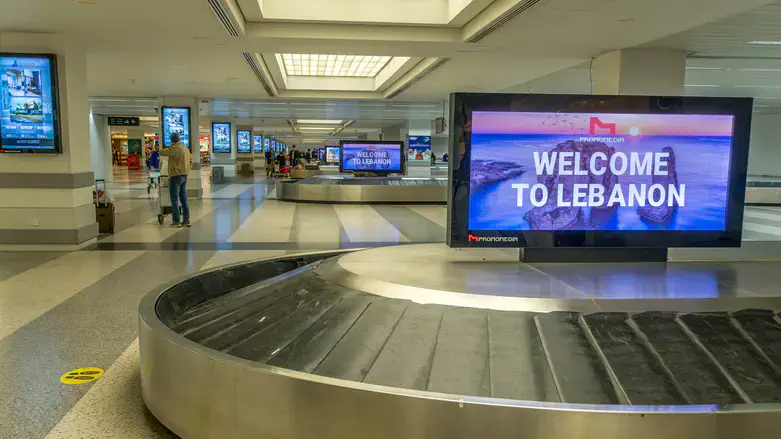
Senior Iranian diplomats transported large amounts of cash to the Hezbollah terror group in recent months, Iran International reported earlier this week.
According to Iran International, the diplomats used their diplomatic passports to avoid security inspections, and carried suitcases filled with US dollars on commercial flights bound for Lebanon.
The site said that at least six Iranian diplomats were involved in the operations: Mohammad Ebrahim Taherianfard, senior Foreign Ministry official and a former ambassador to Turkey; Mohammad Reza Shirkhodaei, former consul general in Pakistan and a veteran diplomat; his brother Hamidreza Shirkhodaei; Reza Nedaei; Abbas Asgari; and former Iranian embassy employee in Canada Amir-Hamzeh Shiranirad.
The London-based site also named Ali Larijani, secretary of Iran’s Supreme National Security Council, as an individual who carried hundreds of millions of dollars in cash to Lebanon.
The cash the diplomats carried played a key role in aiding the Hezbollah terror group in rebuilding its capabilities following Israel's 2024 operation in Lebanon, Iran International noted.
Earlier this week, The US Department of the Treasury announced sanctions against Jood SARL, a gold exchange that converts Hezbollah's gold reserves into currency to fund the terrorist organization.
The Treasury also sanctioned an international procurement and commodities shipping network tied to Hezbollah financiers operating across the Middle East, including in Iran.
"Hezbollah is a threat to peace and stability in the Middle East," Treasury Secretary Scott Bessent said, as quoted by UPI. "Treasury will work to cut these terrorists off from the global financial system to give Lebanon a chance to be peaceful and prosperous again."
The Lebanon-based gold exchange, Jood SARL, operates under the supervision of Hezbollah's Al-Qard al-Hassan (AQAH) finance wing, which is also designated by the US Treasury. AQAH, while registered as a non-governmental organization (NGO) in Lebanon, acts as a bank for Hezbollah, facilitating terrorist operations that undermine Lebanon's stability and development.
The Treasury Department described how AQAH used Jood SARL to address Hezbollah's financial difficulties, specifically establishing a chain of companies that trade gold to fund the group's terrorist activities. The company was created at Hezbollah’s urging in 2025, and its operations extend to locations in Lebanon's Shiite-dominated regions, including Beirut, Bek'a Valley, and Nabatiyeh.
Among the sanctioned individuals are Mohamed Nayef Maged and Ali Karnib, co-owners and managing partners of Jood SARL. According to the Treasury, these entities are involved in procuring arms from Russia and trading commodities, such as gold and fertilizer, to fund Hezbollah's terrorist activities.
The sanctions require US citizens to report any property or interests linked to the designated entities, with criminal charges possible for violations.
Despite the fact that there is currently a ceasefire between Israel and Lebanon, Hezbollah has continuously violated the terms of the truce and has ramped up its military rebuilding. Israel has responded by striking Hezbollah targets in Lebanon.
As part of the US-backed ceasefire between Israel and Lebanon, the Hezbollah terrorist organization was required to disarm, beginning in areas south of the river that border Israel.
Lebanese authorities charged the Lebanese Armed Forces in August of last year to devise a plan ensuring a state monopoly on arms by year’s end.
Hezbollah, however, has condemned the Lebanese government's plan to disarm the terror organization and has repeatedly vowed to keep its arms.