

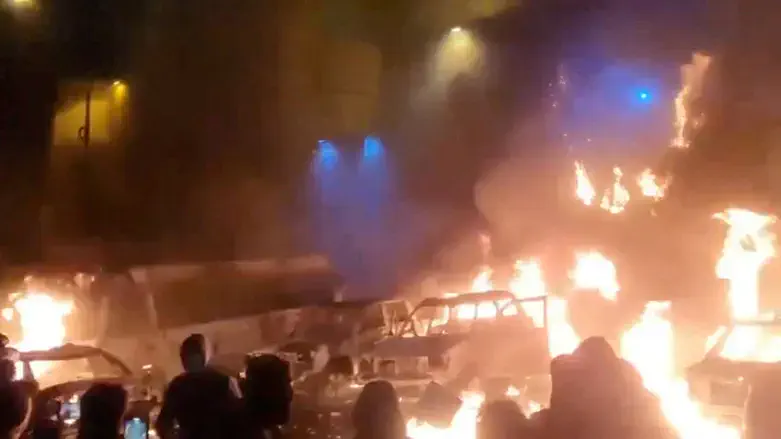
Iran’s judiciary chief issued a stark warning on Sunday, declaring that those involved in the recent wave of anti‑government protests would face punishment “without the slightest leniency", AFP reported.
“The people rightly demand that the accused and the main instigators of the riots and the acts of terrorism and violence be tried as quickly as possible and punished if found guilty," judiciary head Gholamhossein Mohseni Ejei said, according to the official Mizan news portal.
He added that “the greatest rigor must be applied in the investigations," insisting that “justice entails judging and punishing without the slightest leniency the criminals who took up arms and killed people, or committed arson, destruction and massacres."
The demonstrations, which began earlier in January over soaring living costs, quickly escalated into one of the most serious challenges to the Islamic Republic’s clerical leadership in years.
The protests subsided but only after a sweeping government crackdown carried out under a nationwide internet blackout that left Iran largely cut off from the outside world.
Iran’s government has put the death toll from the unrest at 3,117, including 2,427 people it labels “martyrs", a term used for security forces and bystanders, as opposed to “rioters" it claims were incited by the United States and Israel.
However, rights groups say the actual death toll is much higher. On Sunday, the US-based Human Rights Activists News Agency (HRANA) published an updated report estimating the number of confirmed deaths in the protests at 5,459 people, the vast majority of them demonstrators.
However, the organization noted that more than 17,000 additional deaths are currently under review, bringing the total number of deaths linked to the suppression of the unrest to an estimated 22,490.
Meanwhile, Iran International reported that, based on reviews of classified reports and testimonies from medical teams and families of those killed, more than 36,500 Iranian civilians were killed during the regime’s suppression of protests in Tehran in early January, within just two days.
US President Donald Trump repeatedly threatened military intervention if Iran begins executing protest detainees, though he softened his tone after claiming Tehran had paused more than 800 planned executions. Last week, returning from Davos, he told reporters the US was nonetheless deploying a “massive fleet" toward Iran “just in case."