

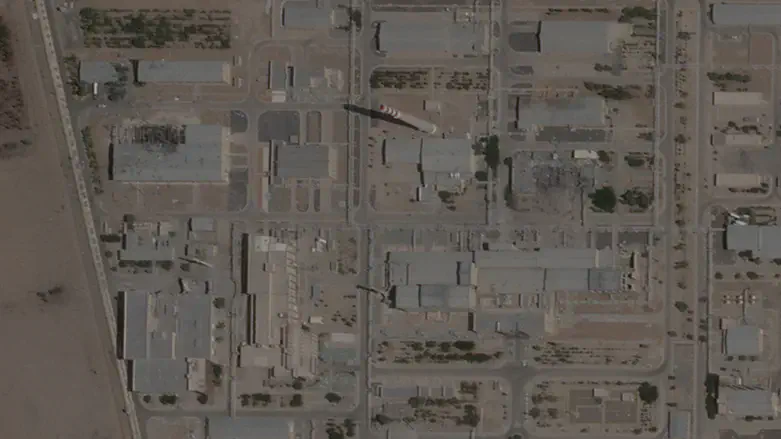
Satellite imagery reviewed by the Institute for Science and International Security has revealed new activity at Iran’s Isfahan nuclear complex, according to its president and founder David Albright.
In a detailed post on X, Albright stated that “we at the Institute found new activity at one of the Isfahan tunnel entrances that occurred during the last few days.” He noted that vehicles were observed at the northernmost tunnel entrance, and that “access to the tunnel portal, which was previously blocked by backfilled dirt, has been gained within the last week.”
Albright added that while the central tunnel entrance also showed signs of movement in mid-July, including the presence of heavy machinery, “no significant progress appears to have been made towards establishing tunnel portal access as of the end of July.” Meanwhile, roadblocks leading to the southern tunnel entrance remain in place, and “no activity is visible there,” he wrote.
At the main Isfahan site, satellite images showed minimal activity. “Some roads have been cleared of debris but there is minimal vehicle presence,” Albright noted, adding that several routes around the damaged aboveground structures remain obstructed, with roadblocks still installed.
Turning to the Fordow nuclear facility, Albright highlighted that new construction was visible. “The latest imagery of Fordow shows a new road being constructed towards the top of the lower hills on the east side of the Fordow site,” he said. The area lies away from the mountain containing the uranium enrichment plant but remains within the site’s outer security perimeter.
According to the analysis, earthworks near two ventilation shafts at Fordow appear to have ceased, and “there is also no observable activity at the primary tunnel entrances leading into the enrichment facility,” Albright stated.
These observations follow earlier assessments by the Institute that Iran’s nuclear program has suffered substantial setbacks in recent months. Still, Albright has repeatedly cautioned that without neutralizing Iran’s underground capabilities, enriched uranium stockpiles stored in hardened tunnels could remain accessible. In his post, he warned that “without destroying tunnels, you only clip wings. Watch for rapid rebuild once smoke clears.”
The findings come more than a month after the US strikes on Iran’s nuclear facilities as part of Operation Midnight Hammer.
US President Donald Trump has previously stated that Iran's key nuclear facilities were "obliterated" following last month's air strikes.
The Pentagon had indicated that the strikes set back Iran's nuclear program by at least two years.
Iranian President Masoud Pezeshkian, in a recent interview, claimed the US airstrikes severely damaged his country's nuclear facilities, preventing access for damage assessment.