The first generation and ours
Sanctity of space/place sandwiched between two forms of sanctity of time.
Sanctity of space/place sandwiched between two forms of sanctity of time.
When Para Aduma and the Golden Calf meet.
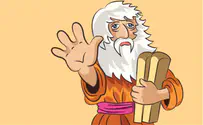
Amalek is alive and well to this day and we must remember fight to destroy the remnants of Amalek from under the sun.
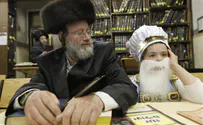
We have a chance to ponder and reflect on the main mitzva of the sedra. The mitzva that the whole sedra is devoted to.
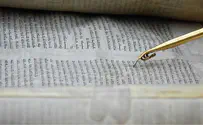
When someone you love asks, 'Can you do something for me?' Your first answer is Yes, followed by needing to hear what you're being asked.
We are Klal Yisrael. But every one of us is also an individual Jew.
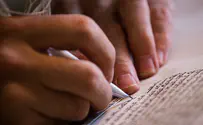
The more one studies the sciences, the more one observes nature, the more one can appreciate G-d and His Creation.

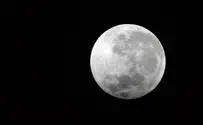
The mitzva of Kiddush HaChodesh is one of our favorite topics to present in Torah Tidbits Audio. What about us? Are we part of this mitzva?
Where do you stand on your commitment and compliance to Torah and to Eretz Yisrael?
The amazing consistency of the greatness of Jewish women and god's clear plan for the Jewish People.
Thoughts on the brother thing in the Book of B'reishit
Look what happened throughout Jewish history with all of the warning signs presented in the Torah and the Tanach.
Hanukkah as a whole is a special holiday. It is not one of the holidays that G-d commanded us to observe in the Torah.
Hanukkah's legacy is just what happened over 2,000 years ago, but every page of Torah we learn and every mitzva we do - today.
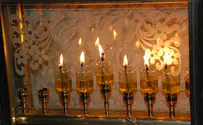
Vayishlach has the well-known encounter between Yaakov and Eisav after a separation of many years.
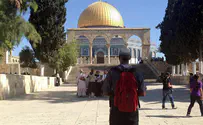
Yitzhak, the vital link to the chain of tradition, was in many ways like his father - but different in one important way.
Torah Tidbits audio for Chayei Sara.
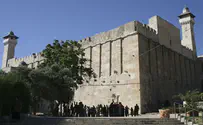
The WHOLE is greater than the sum of its PARTS - not mathematically, but in Judaism.
Some of what the Torah tells us is meant to teach us what to do and what not to do as people and as Jews.
Torah Tidbits audio for Shabbat B'reisheet.
This world is a most pleasant place made for our enjoyment. So why do we sit in a weather-beaten frail hut?

What Yom Kippur should accomplish within each of us.
If you look at the beginning of Nitzavim, you find a strong echo of the Tochacha that we might have thought we were leaving behind us
In this mild form, we seem to be able to handle it and recite it twice a day. But the Tochacha of Ki Tavo, are devastatingly harsh

What is definitely true, is that you can't understand the Written Torah without the Oral Torah.
The gentle path to walk according to the jewish laws and the tradition

This is the main goal of Parshat Eikev: Hear what your mouth is talking about.
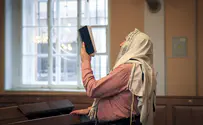
We get a glimpse - a foretaste - of the feast that will celebrate the building of the third Beit HaMikdash.
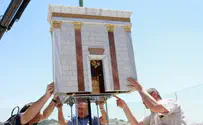
Parshat Mas'ei containing the mitzva to live in Israel. How did Jews react to this commandment?
We have the absolute belief that our current condition of israel Mourning is temporary - and things will get better.
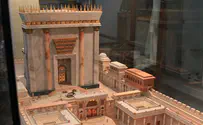
Why do we fast on the 17th of Tammuz? And how to feel a connection to the events of the destruction that took place thousands of years ago?
If we turn our backs to G-d, if we betray Him, if we don't keep His Torah and Mitzvot - we are lost.
Setting straight one of the biggest communal sins of all times.

We can chose to reject the words of the majority who would rather remain in the Midbar and rally to the side of Yehoshua and Kalev.

The Book of Bamidbar represents - in the Frost poem analogy - the path through the Midbar and the long time we spent wandering there.
How many Torah loving and observing Jews seem to say 'thanks but no thanks' for the opportunity to dwell in the Land?
The nature of the partnership between the Written Word and the Oral Law.

Can we not see that the establishment of Medinat Yisrael fits right into the Omer and becomes another bright spot?
This week's show focuses on the Holocaust and its impact on us... and touches upon the sedra, as well.
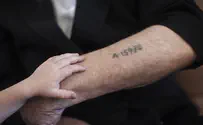
Shabbat HaGadol is more than a pointer towards Pesach - it is the major postscript to it.
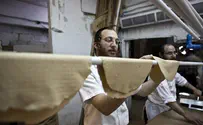
Our partnership with G-d in setting up the calendar.

A Jew is supposed to be a good partner to his/her soul, meaning, to live a Torah life.
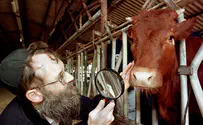
We need to seriously change our attitudes towards how we argue with each other.

From offerings in the Beit HaMikdash to remembering what Amalek did and what Amalek-types have done to us throughout the generations.
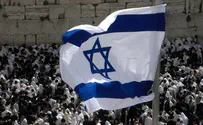
Radio: The Mishkan is completed and the people enthusiastically do what G-d has commanded (this time).
Radio: The whole picture of sanctity of place and time.
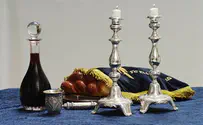
From the highest - the Mikdash and everything in it and about it - to the lowest - the sin of the golden calf.
Can a superior man also engage in simple, everyday actions?
Radio: Will the third Temple descend in fire from the heavens or will it be built by people? We don't have to worry about at this point.
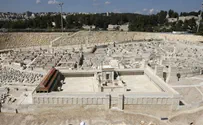
Learn about the great connection between Yitro and Mishpatim.
Radio: What is Yitro doing between the Splitting of the Sea and the Sinai Experience?
Let's try to understand what the basics of faith we can learn from this Saturday.
Plan A and plan B for the Jewish Calendar. Which is what G-d wants us to have?
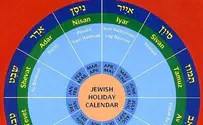
Passover is still far, but this week we find the first time the Jews prepared for it, and how does it relate to our times
Sh'mot is starting from about as low as we've ever been. And once again, we see the amazing potential.
Radio: The way Jewish history has gone so far and the way we must take it from now.

What is the message when Shabbat meets Chanuka and Rosh Chodesh?
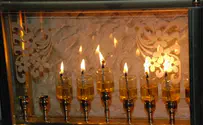
Radio: There is a connection between the story of Yosef and his brothers, and the Hashmonaim.
This week's sidra tells us of an instance in which Yaakov found himself temporarily alone the night prior to his meeting with Eisav.

An overview on the sedra that shows us the early formation of the future Jewish nation.