

Ever hear someone say: "If only Yom HaAtzma'ut were not during S'firat HaOmer, I would celebrate it. But what can you do...?". What a lame excuse.
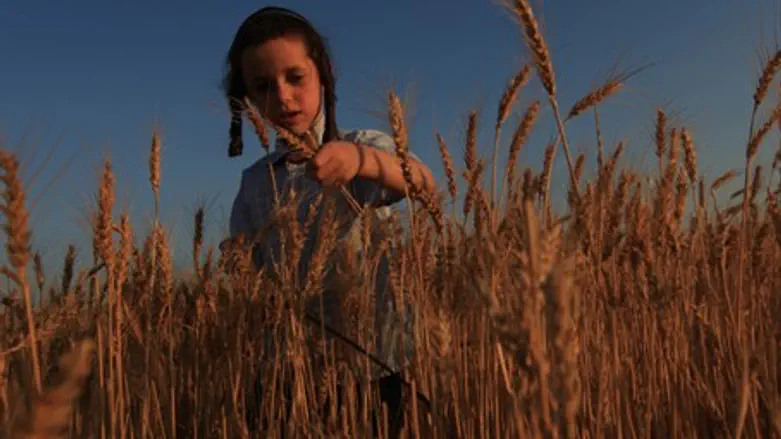
Let me explain. The period of the Omer, from Pesach to Shavuot, was (and will be) a quasifestive period. Something like Chol HaMoed. The first barley offering - the OMER HAT'NUFA - was brought on the second day of Pesach.
From that day, we are commanded to count (with joyous anticipation) until (but not including) the 50th day, when the MINCHA CHADASHA LASHEM, the Two Loaves offering, was brought in the Beit HaMikdash, on Shavuot.
The Omer period is also the reliving of the count from our leaving Egypt until the Sinai Experience. There is joy on that level too, as we re-experience the spiritual growth of the Nation and the personal self-improvement, as we transit from lowly slaves to be worthy of standing at Har Sinai to receive the Torah, to witness Divine Revelation, to become G-d's People.
M'KORI, as we say, originally, this was a happy time. But the Beit HaMikdash was destroyed - and the Omer offering and the Sh'tei HaLechem have temporarily (a sad, long temporary) ceased. The counting became hollow. Where there was joy, now there was nothing. And a nature abhors a vacuum, a mood of melancholy and sadness filled the void.
Tragedies became associated with the Omer period. Most notably, the days became linked to the deaths of thousands of students of Rabbi Akiva and the reasons given for their deaths. Those reasons clashed with what the days between Pesach and Shavuot should have been, and the contrast became poignant.
Episodes during the Crusades also became associated with the Omer period. Mournful customs and practices followed. As applied to most (but significantly, not all) of the Omer period, weddings do not take place. There are further restrictions of music and other joyous expressions. No haircutting and shaving. None of which is endemic to S'fira; it is the way things evolved, under the circumstances. Lag BaOmer became a bright spot within the gloom of the Omer period, because the talmidim of Rabbi Akiva stopped dying.
On the 33rd day? After 33 days? Something like that. Then Lag BaOmer became a full-blown festive day of Kabbalistic origins. Dayeinu. Had He taken us out of Egypt, Had He given us Shabbat, Had He given us the Torah, Brought us into Eretz Yisrael, Built the Beit HaMikdash, Can we not see that the establishment of Medinat Yisrael fits right into the Omer and becomes another bright spot? And the process will continue BE"H until the Omer is back to its original state, and then some.