

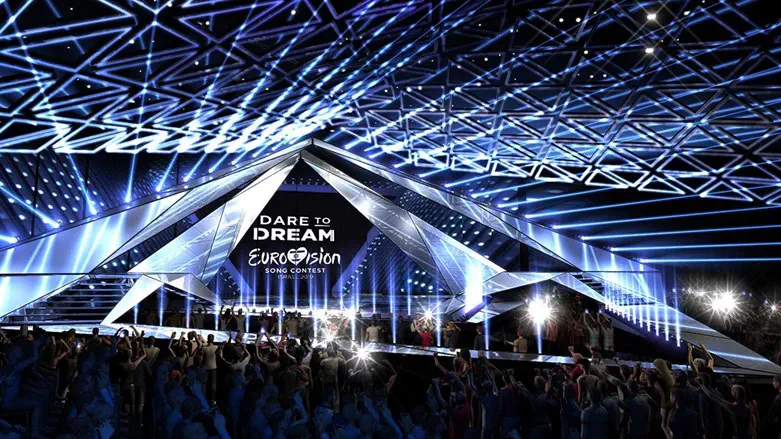
The Netherlands will withdraw from next year's Eurovision Song Contest, Dutch public broadcaster Avrotros announced Monday, arguing that the competition can no longer be regarded as politically neutral amid the war in Gaza.
Avrotros Director-General Taco Zimmerman said international conflicts are increasingly influencing Eurovision and eroding its intended neutrality.
According to Zimmerman, the contest has "undermining its neutral character" and "become a platform for division."
The Netherlands was among five countries that staged a political boycott during this year's competition in protest of Israel's participation. Spain, Ireland, Iceland and Slovenia joined the Netherlands, while hundreds of pro-Palestinian Arab demonstrators also protested outside the event.
Eurovision organizers announced new regulations earlier this month preventing countries involved in armed conflicts from hosting the contest. Avrotros said the changes did not go far enough.
"However, the recently announced changes ... do not provide sufficient confidence that the independent and neutral character of the Eurovision Song Contest has been restored," the broadcaster said.
Eurovision attracts tens of millions of viewers worldwide each year. Israel finished second in both the 2025 and 2026 contests after coming close to winning on each occasion.
The 2027 competition is scheduled to take place in Burgas, Bulgaria, following singer Dara's victory at this year's contest in Vienna.
Zimmerman described the Dutch withdrawal as a difficult decision.
The country's withdrawal from the next Eurovision is "painful as we would have very much liked to be part of the Contest again next year," he said.
"As a public broadcaster, we remain committed to our values. They guide us in everything we do, even when that means stepping away from an event that is very close to our hearts," he added.
The European Broadcasting Union, which oversees Eurovision, rejected calls to exclude Israel from this year's competition. The EBU's membership instead voted to retain Israel's participation.
Eurovision director Martin Green has since said the issue has been settled. In an interview with Variety last month, he rejected the possibility of another vote on Israel's participation.
"No, that’s done. The membership spoke conclusively. Almost 70% made their decision that they believe that public service broadcasters are not responsible for the actions of their government, and that [Israeli broadcaster] Kan should be allowed to participate," Green stated.