
The complainers
‘This was the severity of their transgression, that: it was not meat that they desired, but that they desired desire.
‘This was the severity of their transgression, that: it was not meat that they desired, but that they desired desire.

The Kohen loves the people and they, in turn, love him.

Torah commentaries address the reason for the small number of levites when compared to every other tribe.
A person who is not subjugated to Torah - but to his possessions and his wealth - can not observe the mitzvah of shemita, whilst he still feels that he is the master of his fields.

Torah commentaries weigh in on the philosophic and practical issue of the difference between Shabbat and the other festivals and why Shabbat is mentioned with them despite that.
Commentaries weigh in on what exactly this prohibition means.

‘Why are the periods of impurity - and then purity - of the mother who gives birth to a girl, double the periods where she gives birth to a male?’

Why did Aaron have to be convinced to approach the altar?
Though we had no merits - ‘no פתח no opening’ - Hashem still redeemed us.

Not everyone merits to attain the upper part of the Torah, the concealed Torah which is in the hands of Hashem - however, every Jew is obliged to engage in the other two ‘lower’ parts of the Torah - the Written Torah and the Oral Torah, which are in alluded to as 'saying’ and ‘speaking’.
Commentators weigh in on why the greatest of Prophets could not enter the Tabernacle after it was put up - see the end of the Book of Exodus.

‘The men needed to donate their ornaments to atone for their souls; but the women who did not want to give their ornaments for the calf did not require atonement. ‘Why, then, should the women give their ornaments?

’The wealthy shall not increase and the indigent shall not decrease’ - why?

The instrument of speech is a priceless gift to our people to serve Hashem, more so than any of our other organs. The robe was designed to remind us of that.

A collection of commentaries on our Sages' question: ’’THEY shall make an Ark’’- in plural, unlike the other utensils, which they are also commanded to make, but where the command is in the singular: ‘YOU shall make..’ - why?

From our childhood, we indulge in a world of imagining, until that which we imagine becomes our reality....

Ibn Ezra comments: Many have wondered about this commandment: how can one not covet in your heart, a nice thing, which is goodly in his eyes? Read his famous answer and other commentaries' explanations of it below.
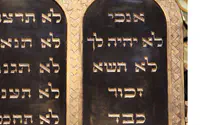
Who freed the slaves - Hashem or Pharaoh?

Various commentators weigh in on a question on the Torah reading. Did Bnei israel in Egypt not have any Mitzvot, so that Hashem felt compelled to give them these two new Mitzvot - pesach and milah - in the merit of which they were redeemed from Egypt?

The Egyptians acted as a snake, in their cruelty adding affliction and suffering, way beyond what had been decree.

Names truly reflect the forces with which the creation, so named, was created.

Those engaged in commerce, must sustain those engaged in Torah, and, further, they themselves are thereby deemed to be engaged in Torah toil!

Why did Joseph ask a question to which he had already been give the answer?
Who asked Yosef to offer his advice, in addition to proffering the solution to the dream, with which he was charged?

Selected commentaries explain why Joseph's brothers were angered by his dreams.
The wicked, in their own eyes, consider themselves to be tzaddikim, and that all that is given to them is their due.

What was the significance of Yaakov's dream of the ladder and angels? A selection of commentators' answers to the question.

What is the reason God wanted Yitschak to think he was blessing Esav?

Why did the Torah find it necessary to testify that she remained righteous throughout her life, from beginning to end? And why did her end come after the Akeidah?
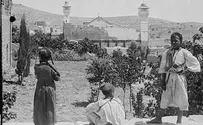
This episode is counted by our Sages as the final, culminating test with which Hashem tested Avraham. But then why is it named for Isaac?
Why didn't Abraham perform the brit milah before G-d told him to?

How can one compare man, with his abiiity to choose, to the heaven and earth? Commentaries weigh in on the question.

There is no nation in the land, except for Bnei Israel, as all the nations, compared to it, are as nought, and do not merit being called ‘a nation’.

A selection of commentaries on a difficult Torah commandment, with a surprising twist at the end.

There are no coincidences. The word Elul and the word Re'eh contain many messages in symbolic form.

Reading Rabbi Lazer Gurkow's article this week informs us as to the outcome of reciting blessings. What do the commentaries add to explain the injunction to say 100 blessings each day?
Commentators weigh in on Moshe's pleas to enter the land.
What do our Torah Sages say about the glaring differences in the two accounts of the 12 spies? And an idea for reconciling them.
Could there be a greater act of mesirut nefesh, than Moshe’s decision to depart this life, so as to not to delay the vengeance of Hashem, and of Bnei Israel?! Read how the commentaries on this week's parsha see it.

Their love for the land was palpable. Even their timing was perfect. A look at the different ways our commentators described the daughters' viewpoint.

Questions and answers of rabbinic commentators on the idea of laws for which we have no reason.

A selection of commentaries weighing in on the meaning of the almond branch blossoming staff test.

Was their sin lack of faith in God, was it a provocation, was it their fear of having to fight - or a combination?
At the end of days, the nations will claim that they are entitled to be rewarded, even though they did not keep the Torah.
Various Torah commentaries' o;pinions on the reason the tribe of Levi had a different status.

"What is the meaning of:’if you follow My statutes’? It means that you toil in the study of Torah..".
Commentators explain why Shmitta transgression is punished severaly and what reliance of Hashem it proposesl

Keeping Mitzvot between man-and-fellow man means to look both at our fellow man and at ourselves correctly, in ways which are ‘opposite’.
Follow in the ways of Avraham Avinu - make sure that every day of our sefira, is truly ‘ours’ - that we have given it content, by serving Hashem.

A collection of commentaries on tsaraat of a house. The Alsheich Hakadosh says: This affliction should be considered by us, as a gift from Hashem. Why?

Are speakers of lashon ha’ra not found amongst the nations? Why then don’t we find that they are afflicted by tzaraat?
Shmini describes the wondrous events of that first day of Nissan, the eighth day of the investiture of the Mishkan.

The word "tsav" is found only concerning the Korban Tamid. Why?

Our Sages expound the word ‘Saying’ in the first pasuk in several ways, feeling that it is superfluous, as immediately after it - in the second pasuk - the Torah again says:’Speak to Bnei Israel, and say to them.’
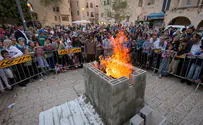
At the end of the Book of Shmot, Moshe cannot enter the Tent of Assembly and the shechina has not yet spoken with him!

The whole of Hashem’s wish in the offerings of the Mishkan was as an atonement for the sin of the calf, to thereby again cleave to Hashem. Careful reading shows that.

if all this was the work of the non-Jewish erev rav, why were Bnei Israel so severely punished?

Moshe’s name is not mentioned in our Parasha.
![And you [Moshe], command the children of Israel...](https://2.a7.org/files/pictures/203x125/1134147.jpg?autocrop=1 "Sipzner /")
Commentaries expound on the meaning of the verse "take for me" instead of "give to me" in this week's parasha on the building of the Tabnernacle.

What did the Torah see, to start its words on the ordinances, specifically on the subject of ‘the Jewish slave? What the commentaries have to say.