Matan Emunah Essay:
Ayin Tovah - Choosing the truth to illuminate
Dr. Edith Eger: We have a choice: to pay attention to what we’ve lost or to pay attention to what we still have.

The body is not a discarded shell; it is a sanctified partner, refined through every mitzvah performed in life. The body and soul are not accidental companions; they are covenantal partners in a process that extends beyond a single lifetime.
Maintaining the appropriate perspective on life is achievable through reflection on both the presence G-d as well as the significance of our existence.
G-d asks us to love one another as He loves us-to value others as He values us.
A “good name" is not a record of one’s spiritual and moral achievements.
In Jewish tradition, the kohen is not merely a Temple functionary; he is a representative of the nation’s deepest aspirations.

Is there a connection between chulin meat and korban meat? Why do they share similar laws of slaughtering?
Why did G-d interrupt the sequence of the mitzvot of the Kohanim with the mitzvot of the Festivals?
The Iranian failure is not only political or moral. It is cognitive. It begins with a false perception of reality itself. In contrast, Judaism built a system in which spiritual leadership is commanded to keep its distance from death to protect the vitality of its foundations.
In a double expression in Parshat Emor, the Torah teaches an important lesson on the responsibility of adults to guide youth and the central role of refined speech and the importance of respectful communication and moral leadership within Am Yisrael.
This week's parasha speaks of sanctifying G-d's Name, Kiddush Hashem. At the Golder's Green attack, nobody intended to perform this commandment, but it shone forth from them.

The meaning of “holy" is entwined with the sanctification of the Divine Name. How is that done?
The gap between disqualifying a blemished Kohen from temple service and our deep appreciation for IDF wounded, such as the heroic conscript Ari Spitz, reveals a fundamental principle.
The entire verse uses a double expression :’say’, but why?
Jewish education must invest greater effort and resources in guiding our youth in this vital area: providing guidance before marriage.
“And they shall teach My people the difference between the holy and the profane and cause them to discern between the impure and the pure" (Ezekiel 44:23).
On the subject of cremation in Jewish Law, part II.
It is a mitzvah to establish a festive day of joy and thanksgiving to God on the day when salvation was granted to Israel.
In both cases, you know what you put in, but you don't know what comes out. Or is it not to simple...
The Tanya compacts four millennia of Jewish wisdom to answer the great personal and existential questions of life. It has revolutionized the way we think about G -d the human soul, the world and our place in it.
In an attempt to settle the debate over conscription, the justices are using small children as a means of punishing their parents.
We must work day and night as one nation to continue the ingathering, to continue the rebuilding, to continue all together in the battle to safeguard our inheritance from enemies without and within, striving alongside Hashem for the rebuilding of the Beit HaMikdash, may it be soon.
A bold framing. Perhaps even uncomfortable and problematic.. But one that creates the conditions for connection.
Stories to remember that took place in various bomb shelters (miklatim) across Eretz Yisrael in the recent war with Iran.
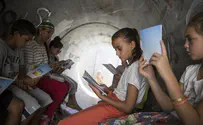
The Hebrew word for charity, tzedakah, derives from tzedek, meaning “justice."
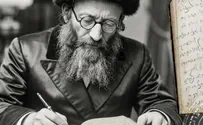
How the saintly Rabbi Yaakov Moshe Charlap, rav of the celebrated Beit Knesset HaGra in Jerusalem, acted with regard to the Haftarah when Parashat Kedoshim was read without being preceded by Acharei Mot.
The scene the prophet depicts as one that shows that Redemption is here is so familiar in today’s Jerusalem that we don’t even recognize it as anything to get excited about.

The Torah portions of Acharei Mot and Kedoshim reveal the deeper role of Yom Kippur as the lasting day of forgiveness and true acceptance of the Torah, offering new insight into its connection with Shavuot.
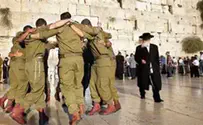
In these terrible times of war, in these terrible times of killings and the murder of Jews-times of Acharei Mot-we still remain Kedoshim.
The Rambam teaches that we must say a blessing before we eat any food or enjoy pleasant aromas.

May the Mishnah we are about to learn inspire us to infuse all our relationships and gatherings with Torah study.
So why do so many religious Jews live in the Diaspora? One explanation is that after being expelled from Eretz Yisrael, during our long and oppressive years of wandering, our clear understanding of our original national mission became foggy and lost.
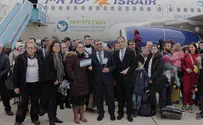
Could it be that what we commemorate on Yom Haatzma'ut is not merely a political milestone, but the unfolding of a prophetic promise?

A stark message to the nations: reality has changed, and the dream of erasing Israel has faded.
Various commentators are brought to bear on the reasons for the two fates for the two he-goats of Yom Kippur.
We already have a powerful and modern country, but we must remember and repeat that the goal is not only a material home; we must pour spirit and soul into the national enterprise.

The title is a phrase from Psalm 107, said at the start of the Yom Haatzma'ut evening service. What is its significance?
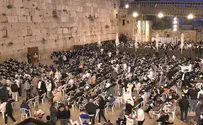
These wars themselves are stages of the Redemption. Our wars are not like all the other wars in the world. We are engaged in a long and difficult war against war itself, against the impurity and evil which degrades mankind into wielding the sword and shedding blood.
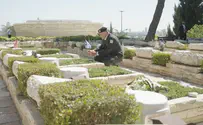
On Yom HaZikaron, as we stand in the depth of loss, we see what Rabbi Akiva shouted: We are one family. The soldiers currently on the front lines and those who have fallen do not check who is "religious enough" or "political enough.
Those who live in Israel sacrifice daily for the dream of Jewish peoplehood. We in the US, who do not yet live there, have a greater obligation to demonstrate that nothing, not ideology or geographical distance, can hold us apart.
The word for "independence" in Hebrew, atsma'ut, has different possibiities for delving into its meaning.
The argument is an internal argument, within the family, like the arguments between Rabbi Akiva and Rabbi Tarfon and between Rashi and Tosafot.
What does Passover-now behind us-ask of us today?
In our time, when the elevator has become the accepted way of entering homes, it is appropriate to affix a mezuzah there.
In our prayers, we often ask Hashem to bless us with יְשׁוּעָה וְנֶחָמָה, salvation and consolation. Throughout our history, as they do this week, the two come together.
The labor demanded of us is the labor of creation: to give voice to Torah, so that its light may spread and uplift the life of the nation.
The Tanya compacts four millennia of Jewish wisdom to answer the great personal and existential questions of life. It has revolutionized the way we think about G -d the human soul, the world and our place in it.
The Torah portions of Tazria and Metzora teach that true holiness requires balancing distance and closeness, as seen in the laws of purity that safeguard personal, family, and Temple sanctity.
Lessons from the Torah portions of Tazria and Metzora, the exact middle of the Torah, and how all three connect to the days of the Omer.
One of the centers of global anti-Semitism is found in the Vatican, which for generations has preached hatred of Israel.
Even the great Rabbi Akiva's pupils failed to keep "you shall love your neighbor as yourself."
Isaiah’s magnificent, inspiring prophecies are coming true before our very eyes. They are no longer a matter of faith: they are now tomorrow’s headlines.

Dvar Torah for Noahides: Israel and America are allies today not because they are identical, but because in this moment they serve a shared purpose.
A parent’s attachment to their child can become at odds with the imperative to act in the best interests of the child.

We remember a world that was destroyed, we look at the threats we face right now, and we are left with that same unanswered question: Why?
This week’s message deals with military conscription - in the United States of America...

Shabbat Rosh Chodesh is more than a calendrical coincidence, it is an opportunity.
Morris Engelson emphasized the divine Hand behind all the details, from his childhood in Vilna to his teenage years of hiding, to his ultimate escape.

In many cases, symptoms surface at the moment of recognition.
On Holocaust Memorial Day at Merkaz Harav Yeshiva decades ago, Rabbi Tzvi Yehuda Kook approached the question of the Holocaust from a perspective which embraces all of Jewish history.