
Today is the fast of the 17th of Tammuz, which began in Jerusalem at dawn, 4:31 am, and ends tonight at sunset at 8:13 pm.
The Fast of Tammuz commemorates several historical events, including the breaching of Jerusalem's walls by the Romans in 70 CE. It also marks the start of a 3 week period of mourning that includes abstaining from weddings, haircuts, and other joyful activities.
This article explores the prophetic and theological idea that the Jewish fast days commemorating the Temple's destruction will be transformed into joyous festivals. Drawing on biblical, rabbinic, and historical sources, it emphasizes how redemption emerges from crisis, portraying destruction not as an end in itself but rather as a necessary step toward spiritual and national renewal.
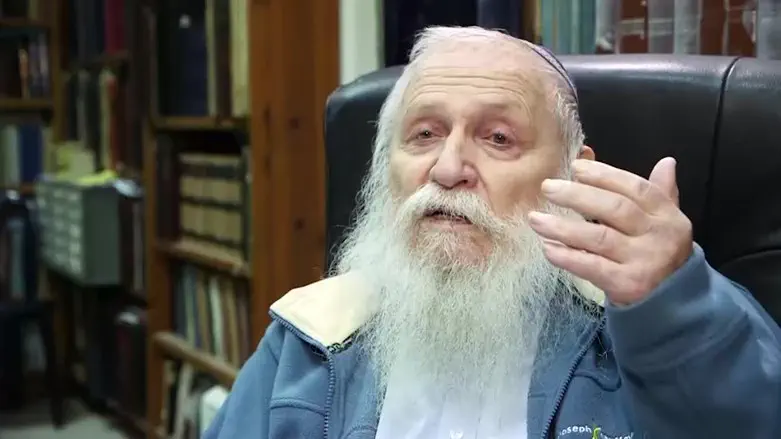
It is an extract from Rabbi Chaim Drukman’s book, “La-Zeman Hazeh,” a series of essays about Jewish holidays, including “new” ones that were established in the last hundred years to celebrate the Jewish people’s return to the Land of Israel.
Adapted and translated by Moshe Goldberg
Fast Days and Holidays
In the book of Zechariah, there is a prophecy about the future of the fast days commemorating the destruction of the Temple. The prophet says that in the future all days of mourning will become days of joy, celebration, and festivity (8:19):
“Thus says the Lord of Hosts: The fast of the fourth, the fifth, the seventh, and the tenth months shall become for the house of Judah times of joy, gladness, and cheerful feasts.”
In the future, when we reach complete redemption and the Third Temple is built, we will no longer mourn and fast—what we once cried over has been restored. The days of mourning will become ordinary days. But turning mourning days into festivals? That seems like a big leap. What is there to celebrate?
A Midrashic Tale
We start with a Midrash from the time of the destruction (Eicha Rabbah 1:51):
A man was plowing. One of his oxen bellowed. A passing Arab asked him who he was. The man replied he was a Jew. The Arab told him to release his ox and dismantle his plow as a sign of mourning. The Jew asked why, and the Arab said the Jewish Temple had just been destroyed, something he deduced from the ox's bellow.
As they were talking, the ox bellowed again. The Arab then said, “Now tie your ox to the plow again—Israel’s savior has just been born.”
The Jew asked, “What is the savior's name?”
“Menachem,” answered the Arab.
The idea behind this story is profound: on the very day the Temple was destroyed, the savior of Israel was born. What does this mean?
It may indicate that with destruction was born the longing and hope for redemption. But there is a more profound idea: the Messiah can only be “born” out of destruction. Complete redemption and renewal grow from within devastation. The destruction of the Second Temple laid the cornerstone for the Third Temple.
The Vision Behind Destruction
A verse in Psalms (46:9) might seem puzzling at first:
“Come, behold the works of the Lord—Who has wrought desolation in the earth.”
Desolation? Are these the great works of God we should admire? How can devastation and ruin be considered divine achievements?
The answer is that with respect to the Holy One, Blessed be He, there is no such thing as destruction. Everything that happens is part of a greater process of rebuilding. If we view desolation with prophetic vision (“Come, behold…”), we will even see destruction as a step in a divine creative process. Whatever seems to be a ruin is part of a grand design—it clears the way for a deeper, more exalted rebuilding.
When an old and crumbling neighborhood is to be rebuilt, its buildings must first be demolished. A layman might see this as destruction, but someone who knows the full plan sees it as the first stage of improvement.
And this applies not only to the physical Temple. All the suffering endured by our people throughout history is part of a divine plan to build a more complete and refined reality, unlike anything ever seen in the world.
In the Midrash quoted above, when the Jew asks for the Messiah’s name, the Arab answers, “Menachem (Comforter).” True comfort is born at the moment of destruction. The ruin becomes the foundation stone for long-lasting eternal consolation.
“Though I have fallen—I will rise!”
This, then, is the key: downfall and a period of darkness are often necessary to reach a greater and loftier reality than before. We must destroy a flawed existing structure to rebuild it better.
Jeremiah says: “It is a troubled time for Jacob—but from it he shall be saved.” (30:7).
Not only will Jacob be saved from trouble but through it and because of it. Suffering is part of the salvation process.
This idea is echoed in the teachings of the Vilna Gaon (Kol HaTor 1:13):
"Know in advance: every crisis leads to salvation, which comes from suffering... The Land of Israel is acquired through hardship, but in that way it is fully acquired... We must never retreat due to hardship. Be assured: from the narrow straits, Jacob will be saved; from the depths, we will reach broad expanses.”
Salvation often grows from within crisis. What seems like delay or darkness is really a hidden advance toward the light.
Three Modern-Day Examples
The principle of “from it he shall be saved” can be seen in our own recent history:
- Post-Holocaust Immigration: After the Holocaust, the British Mandate severely restricted Jewish immigration to Israel. The UN eventually decided to establish a Jewish state as a direct response to these restrictions. The crisis itself led to a blessing.
- The UN Partition Plan: Although the UN approved a Jewish state, the allocated land was tiny. Looking back, we now see how even this narrow beginning led to greater sovereignty—a broad view reveals hidden salvation.
- Six-Day War: On the eve of the war, the mood in Israel was dark and hopeless. Yet within days, most of the land—including Jerusalem—was returned to Jewish hands.
These are just a few recent examples. The same principle applies to the exile and destruction of the Temple. These catastrophes are incredibly painful—but they are also a cure, the path to complete healing and redemption.
“A Festival Was Declared Upon Me”
In the Shulchan Aruch (Orach Chaim 559:4) there is a ruling about the day before Tisha Be’av that at first glance seems curious: “As on the eve of a holiday, we do not say Tachanun, and when the eve of the fast falls on Shabbat, we do not recite the verses ‘Your righteousness.’”
The Mishnah Berurah explains: "'Because it is a ‘festival’—as it is written: ‘A festival (mo’ed) was declared upon me’ (Lamentations 1:15)." Since the day of the destruction is called a festival, Tachanun is omitted.
But how can that be? The full verse is:
“The Lord has rejected all my strong ones in my midst. He has declared a time (mo-ed) for me to crush my young men.”
“Mo-ed” clearly refers to a time, not a celebration. And it refers to a time for destruction and ruin!
But based on everything we have seen, this is Zechariah’s prophecy—the days of mourning will be transformed into days of joy. The “festival” is the date scheduled for painful surgery that brings healing. The day of destruction is also the beginning of construction—demolition for the sake of rebuilding.
This is the true nature of the fasts, and it will become clear in the era of redemption. For now, we still fast and mourn. But even now, the laws of prayer hint at where we are headed. With all the pain and mourning, we see a deeper perspective: the fasts are not ends in themselves, but steps toward the ultimate, eternal building—the Third Temple.
Rabbi Kook’s Vision
We conclude with the words of Rabbi Abraham Isaac HaKohen Kook to his son Rabbi Tzvi Yehuda, written on the 26th of Tammuz, 5676 (1916), more than a hundred years ago (Igrot HaRe’iyah, vol. 3, letter 778):
“The hidden festivity of the bitter and hasty day—the day of the burning of the House of our desire—will be revealed. All destruction, all darkness, all ruin and degradation—are bound up with it. From within the straits there will be relief, growing ever brighter.
And it will become clear how all the ruins targeted only corruption and decay.
The fire that the Lord set in Zion consumed only filth and loathsomeness, sickness and weakness that held back the strength of Israel from manifesting in its full glory.”
One day, the hidden festivity will be revealed. The destruction was never the end—it was always aimed at eliminating rot and clearing the way for the greatest good: a complete and eternal redemption.
For more on the Fast Days, click here.