
“And the elders of Moab and the elders of Midian went with the means of divination (kesamim) in their hands, and they came to Bilaam” (Numbers 22:7).
The root of “kesamim” is “kasam,” which is phonetically related to “gazam” (exaggeration). Thus, in the very word “kasam” lies “the implication of sham,” writes Rav Samson Raphael Hirsch. The same implication lies in the word for magic, “kishuf,” which is phonetically related to “kazav” (deception).
Rav Hirsch adopts the opinion of the Rambam that “true” magic doesn’t exist. Magicians use sleight of hand to fool us into thinking they can, for example, pull a rabbit out of an empty hat. In fact, however, they can do no such thing. In fact, to teach us how ridiculous it regards magic, the Torah - in prohibiting its practice (Exodus 22:17) - uses the feminine form of magician, “mechashefah” (witch) “whereas elsewhere in Tanach it always occurs in the masculine.” (The fact that this “art is quite usually practiced by any old woman…also shows the absurdity of its pretensions,” writes Rav Hirsch.)
If “true” magic doesn’t exist, though, why does the Torah demand that we kill witches? Isn’t magic just “a folly to be smiled at, or a madness to be pitied” rather than “a crime to be punished”?
Rav Hirsch answers this question by arguing that people generally only practice the black arts to bypass G-d’s laws: “For matters that were in accord with the Deity one could trust to the intervention of Divine Providence. Only for matters where one knew that one was in opposition to the Divine Will was one driven to try to find a by-way, some indirect means by which to gain one’s end without the assistance of, and against the laws of, a benign Providence.”
The witch herself hasn’t really done anything “dark” - she hasn’t done anything other than deceive. Thus, she “does not deserve death,” properly speaking. In fact, that’s why the Torah - in pronouncing her punishment - doesn’t use the common phrase “mos yumas” (shall surely be put to death). Instead, it uses an unusual - and circumlocutious - phrase: “lo sechayeh” (you should not let live). With this strange wording, the Torah teaches us:
“[T]he crime, considered isolated and it itself…may not in itself be deserving of death, but you, the Nation, in its representative, the court, may not let the criminal live. [The practitioner of magic] must die out of consideration for the pernicious effect of his crime on the community…because of the erroneous ideas that he spreads and the devastating effect he has on morality.”
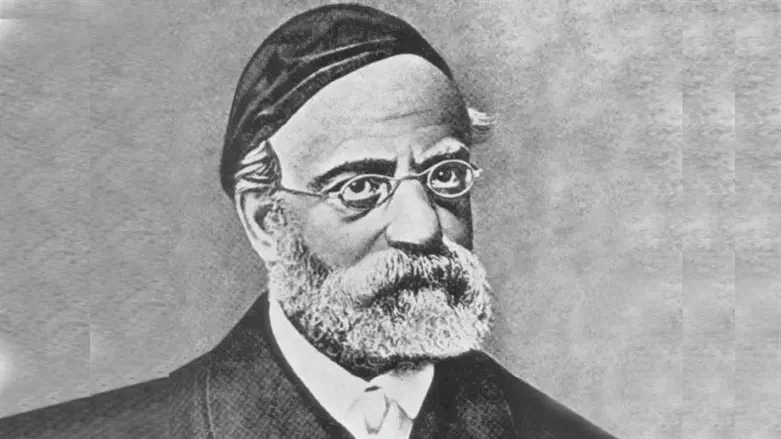
Rav Samson Raphael Hirsch (1808-1888) - head of the Jewish community in Frankfurt, Germany for over 35 years - was a prolific writer whose ideas, passion, and brilliance helped save German Jewry from the onslaught of modernity.
Elliot Resnick, PhD,is the host of “The Elliot Resnick Show” and the editor of “The Rav Samson Raphael Hirsch Dictionary.”