

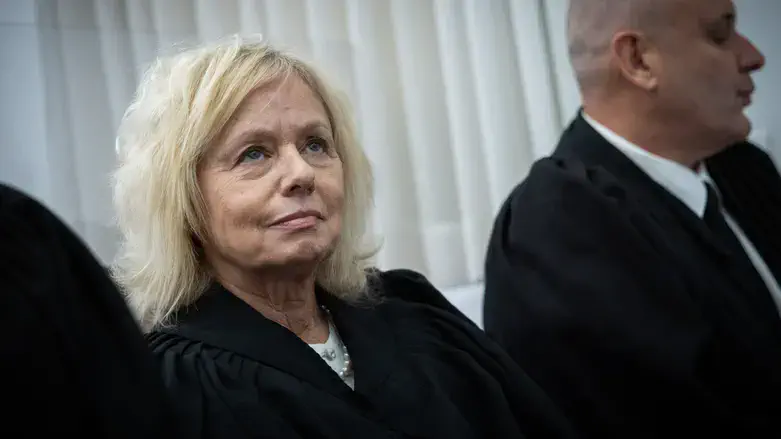
The judges in Prime Minister Benjamin Netanyahu's trial have suggested considering dropping the charge in Case 4000, while some in the prosecution are already calling for the trial to proceed as usual.
According to a Kan News report on Friday morning, prosecution officials believe the charges in Cases 2000 and 4000 should remain in place and that an appeal should be filed with the Supreme Court if Netanyahu is acquitted.
The State Attorney's Office has yet to formulate an official position. Attorney General Gali Baharav-Miara is expected to discuss the judges' recommendations with State Attorney Amit Aisman, prosecutor Yehudit Tirosh and the other members of the prosecution team.
The State Attorney's Office said in response, "No discussions have yet been held on the matter, and, as is known, we do not generally comment on the content of internal discussions."
Earlier this week, Baharav-Miara attended a hearing in the trial at the Jerusalem District Court. The judges clarified that she had been summoned because the decision on continuing the proceedings rests with the Attorney General, and that this did not constitute an expression of no confidence in the prosecutors.
The judges said that, following the conclusion of Netanyahu's testimony, the trial had reached a stage at which it was appropriate to consider how to proceed. They stressed that their assessment was based on the evidence heard so far and that their remarks concerned Netanyahu alone, as they had yet to hear the other defendants.
The judges said the bribery charge in Case 4000 presented significant difficulties. They pointed to the difficulty of making findings based on Shlomo Filber's testimony about an instruction he allegedly received from Netanyahu, citing, among other things, a change in his account and information inconsistent with his testimony.
The panel expressed doubt as to whether unusual responsiveness to Netanyahu's requests had been proven, and whether it had been established that he was aware of it at the time. They said these doubts also made it difficult to establish the alleged conflict of interest underlying the breach of trust offense, adding, "Regarding this charge, we assess that the prospects of conviction are low enough to warrant reconsideration."
Regarding Case 2000, which centers on conversations between Netanyahu and Arnon Mozes, the judges said they had "serious doubt as to whether the conduct described in the indictment constitutes an offense." The judges questioned whether the account in the indictment and the evidence presented substantiated the allegation that Netanyahu had used the power of his office to obtain a personal benefit.
However, the panel noted that the State had not yet had an opportunity to present a structured argument on the issue. It proposed hearing arguments from both sides before deciding how to proceed.
Regarding Case 1000's third charge, the judges said that most of the evidence had already been presented to them, subject to a request to take testimony abroad. They proposed finding a procedural way to conclude the proceedings on this charge and reach a verdict.