

In a significant development in Prime Minister Benjamin Netanyahu's trial, Jerusalem District Court judges on Wednesday pointed to substantial difficulties with the charges against him in Cases 4000 and 2000, assessing that the likelihood of conviction on some of the charges was low.
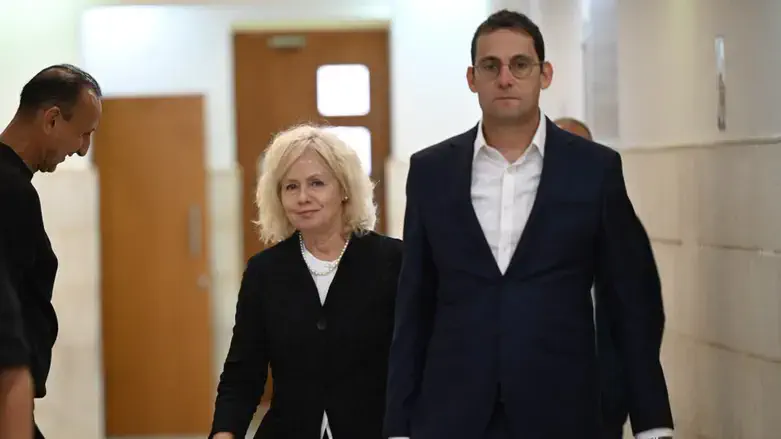
The remarks came at the opening of an unusual hearing attended by Attorney General Gali Baharav-Miara, who appeared at the judges' request despite her objection to appearing in person.
Presiding Judge Rivka Friedman-Feldman first addressed Case 4000, pointing to significant doubt over whether Netanyahu was aware at the time of exceptional responsiveness on the part of the Walla! news website.
She said the difficulties in the case were not limited to the bribery charge but also extended to the breach of trust charge.
During the hearing, the judge clarified that there were evidentiary and legal difficulties in proving the offenses attributed to Netanyahu in Case 4000. She also said there was, "serious doubt" regarding Netanyahu's awareness at the time of the alleged exceptional responsiveness.
The judge added that, given these doubts, the claim that there was a conflict of interest also presented difficulties regarding the breach of trust charge. Addressing the prospects of conviction, she said they were low and that reconsidering whether to continue the proceedings was warranted.
The presiding judge then addressed Case 2000, which concerns conversations Netanyahu held with Yedioth Ahronoth publisher Arnon Mozes. She questioned whether the indictment established an offense merely on the grounds that Netanyahu had not ended his dialogue with Mozes.
She said this charge also presented a legal difficulty and that its implications for the continuation of the proceedings should be examined.
The hearing comes after the three judges on the panel, Rivka Friedman-Feldman, Moshe Bar-Am and Oded Shaham, ordered Baharav-Miara to appear before them in person.
Baharav-Miara sought to avoid attending, but the judges rejected her position and made clear that her presence was essential for a direct discussion about the further conduct of the trial.
In their decision, they wrote, "After considering the Attorney General's position, we have concluded that there is nevertheless added value in the Attorney General herself appearing".
The judges explained, "To conduct a focused, two-way dialogue, we believe it is necessary for the official responsible for making decisions to be able to hear the remarks directly and respond to them if necessary."
In their original decision, the judges did not specify the issues they intended to raise, stating only that the hearing's purpose was to examine the conduct and progress of the proceedings concerning Netanyahu.
The remarks made during the hearing may raise questions for the prosecution about how to proceed with the charges, including the possibility of reconsidering the bribery charge in Case 4000.
Other options that may be considered include criminal mediation or renewed plea bargain talks, after attempts to reach an agreement during the tenure of former Attorney General Avichai Mandelblit failed to produce a deal.
The Taxation and Economic Prosecution continues to stand behind Case 4000 despite the difficulties identified by the judges. According to the position attributed to Baharav-Miara, a plea bargain with Netanyahu would be possible only if it included a finding of moral turpitude, a condition Netanyahu rejects.