
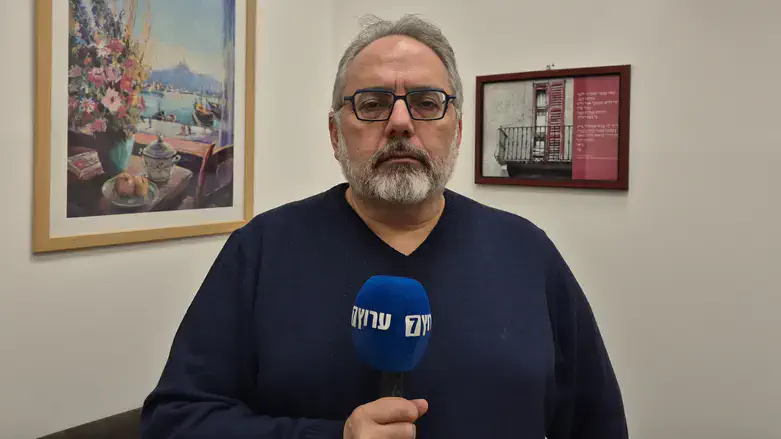
Prof. Yuval Elbashan of Ono Academic College, the legal commentator for Israel Hayom, is calling on Attorney General Gali Baharav-Miara to reconsider continuing Prime Minister Benjamin Netanyahu's trial in light of recent developments in court.
In an interview with Israel National News, Elbashan argued that the difficulties that have emerged in the cases against Netanyahu are not new, and that the judges have been warning about them for more than three years.
He said the prosecution should consider dropping Cases 2000 and 4000 and reaching an agreement in Case 1000, rather than continuing legal proceedings that could last for several more years.
Elbashan said, "For more than three years, the judges have been hinting, then saying explicitly, and then also writing that this case is problematic in a great many respects", stressing that reactions to the latest developments in the trial reveal a significant gap between events in the courtroom and how they have been presented to the public over the years. Elbashan argued that anyone who followed the hearings could have identified the difficulties the judges raised, and that their latest remarks should therefore not be treated as a surprise.
He also criticized media coverage of the trial. In his assessment, some reports published over the years did not fully reflect the difficulties that arose during the hearings or the judges' views on the evidence presented to them.
Alongside his criticism of the prosecution and the media, Elbashan defended the three judges hearing the case and rejected attempts to question their professionalism or suggest they were biased in Netanyahu's favor. He said, "We have a court that is genuinely doing its job and is not yielding to public pressure from either side".
Elbashan's main criticism, however, was directed at the organizational culture within the State Attorney's Office. He argued that when difficulties emerge in a criminal case, the institution sometimes struggles to reassess its decisions and prefers to defend its original position, even in the face of significant questions that arise during the trial.
Elbashan clarified that he was not claiming that all prosecutors act out of improper motives. He said the problem lies in an institutional outlook that calls for defending the institution and its decisions, even when it becomes clear that there are grounds to reconsider them.
The primary responsibility now, he added, rests with the attorney general. He said, "She can also do what is most appropriate professionally: listen to the judges, assess the prosecution's prospects and the public interest".
His preferred option is to withdraw the charges in Cases 2000 and 4000 while seeking an agreement in Case 1000. However, Elbashan expressed doubt that Baharav-Miara would choose to change the prosecution's position.
In his view, if the prosecution insists on continuing the trial and ultimately receives adverse rulings, the attorney general will also bear public responsibility for the decision to proceed. He said, "It is time for the people in our prosecution service to show some backbone too, for us to hear, just once, the words 'We were wrong'".
He said the decision facing Baharav-Miara is not straightforward, in part because senior figures close to her were involved in proceedings relating to the case. He said, "Her decision will be her true Independence Day, standing up both to her inner circle and to her base".
Elbashan made clear that it is precisely because he attaches great importance to the law enforcement system that he expects it to show a willingness to address the difficulties that have arisen in the trial and consider changing its position. He said, "I hope this sense of responsibility will lead her to pursue a compromise".