

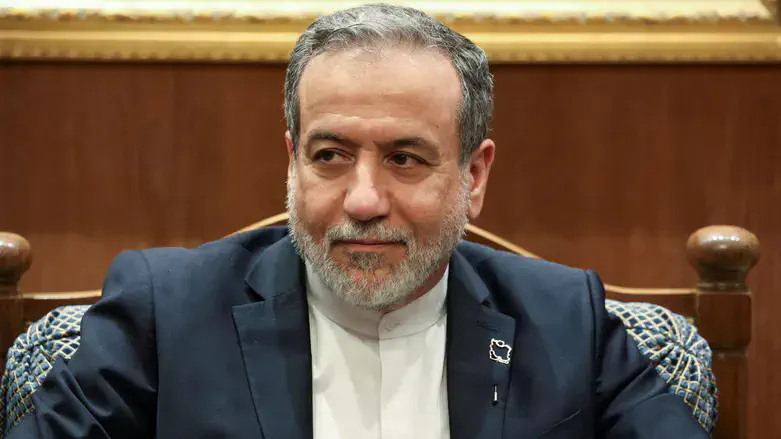
Iranian Foreign Minister Abbas Araghchi acknowledged on Thursday that diplomatic efforts to resolve the conflict with the United States were continuing, but made clear that Tehran was unwilling to soften its conditions for reopening the Strait of Hormuz.
Speaking in an interview with Iranian state broadcaster IRIB, Araghchi confirmed that Qatar and Pakistan remained actively involved in attempts to broker an agreement.
“Representatives of the Qatari and Pakistani mediators are continuing their work, exchanging ideas and putting forward proposals. This is part of the usual process," Araghchi said.
Asked whether the diplomatic initiative had yielded any progress, the Iranian Foreign Minister indicated that Tehran was considering several proposals.
“Some ideas have been put forward, and I think there may be ways to move forward. These are being examined, but our position remains unchanged," he said.
“We have a set of demands that must be met and implemented before the Strait of Hormuz is reopened and negotiations continue toward a final agreement," Araghchi added.
His remarks came amid increasingly defiant statements from senior Iranian officials as US President Donald Trump weighs the possibility of renewed military action against the Islamic Republic.
Islamic Revolutionary Guard Corps (IRGC) spokesman Hossein Mohebbi argued on Wednesday that the economic cost of sustaining the American blockade and growing fatigue within the US military would ultimately force Washington to withdraw from the region.
He claimed that Iran, in contrast, possessed sufficient military resources, equipment and personnel readiness to withstand further hostilities, pointing to its performance over the past 15 to 16 months.
Iranian Deputy Parliament Speaker Hamidreza Hajibabaei also advocated targeting the security of regional oil exports in response to the economic restrictions imposed by Washington.
On Tuesday, Iranian National Security Council Secretary Mohsen Rezaei threatened a powerful response to any renewed American offensive and pledged that Tehran would defeat the blockade.
Rezaei described the American policy as “delusional and futile," predicting that it would be no more successful than what he claimed was Washington's failed military operation.
Trump, meanwhile, used a Thanksgiving address to deployed American service members on Thursday to assert that the United States was close to defeating Iran and that he retained control over when the war would conclude.
"The First Lady and I joined millions of Americans this holiday to pray for your safety and success, and you're going to continue that deployment. And we have victory at hand. It's going to be sort of whenever I want it to be, to be honest," Trump told the troops.
The President questioned whether Iranian leaders would take advantage of Washington's diplomatic overtures to prevent additional casualties.
"We're trying to be nice. We're giving them every chance to make a deal and save a lot of lives. But I'm not sure if they are going to take advantage of that. Some people question why. Are they crazy? Maybe they are," Trump stated.
In subsequent remarks to reporters, Trump maintained that Iran's military capabilities had been severely diminished and reiterated that his administration was giving Tehran an opportunity to avoid further strikes.
“We're trying to give them a chance to be smart. They have no military. Their military is decimated. Their air force is wiped out. Their navy is wiped out. Their anti-aircraft is wiped out."
Trump also raised the possibility of striking Iran's Pickaxe Mountain nuclear site if military operations resume.
“They haven't been able to do anything with their nuclear sites that we wiped out. But if we did anything, we would hit Pickaxe [Mountain]. I mean, we can tell them because they can't do anything about it."