

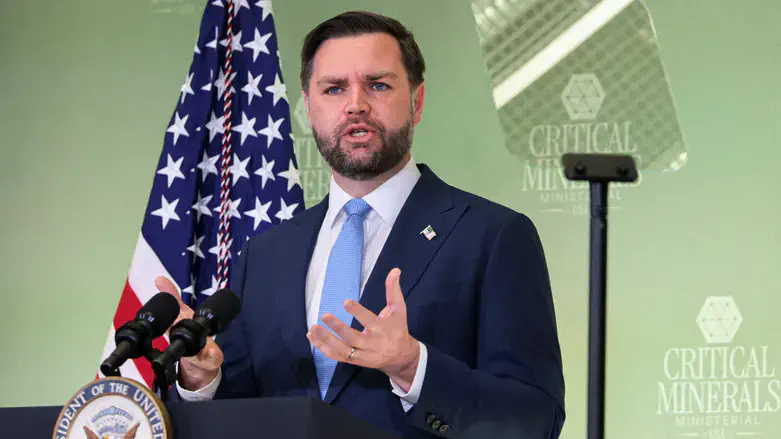
US Vice President JD Vance said Thursday that the conflict with Iran has moved into a different stage, with Washington now placing greater emphasis on economic measures after the destruction of Iran’s conventional military capabilities and nuclear infrastructure.
Speaking to The Clay Travis & Buck Sexton Show, Vance said economic pressure has become the most effective instrument available to the United States.
“We’re kind of now in a new phase where the most effective tool that we have is the economic pressure that we can apply to them," Vance said.
He argued that Iran's ability to use the Strait of Hormuz to exert pressure on the international economy has been weakened, saying the US has continued moving substantial quantities of oil and gas through the waterway despite Iranian attacks on commercial shipping.
“Do they want to have their economy strangled for the rest of time or do they want to have a better relationship with the West?" he asked.
Vance acknowledged that Washington's economic campaign could prompt Tehran to retaliate economically, but said Iran has so far suffered greater pressure.
“This is a delicate dance because we apply economic pressure to them, they're going to try to apply economic pressure to us, but what has been true over the last couple of weeks is they felt a lot more pressure than we have," he added. “We're going to keep that going because we think that's the best way to ultimately accomplish the final objective here."
According to Vance, the US objective extends beyond eliminating Iran's existing nuclear facilities. Washington also wants to ensure Tehran will not be able to reconstruct them.
“What we’re trying to do is create a changed reality on the ground where not just we can say with confidence their facilities have been destroyed, but we can also say with confidence they’re never going to try to rebuild," he said.
Vance spoke a day after President Donald Trump announced a sweeping new campaign of economic pressure against Iran. In a Truth Social post, Trump described the effort as "an economic D-Day" and warned that countries providing Iran with economic support would face consequences.
"These maniacs are on the ropes, and these HISTORIC MEASURES will cripple them and their ability to project terror worldwide. IRAN WILL NEVER HAVE A NUCLEAR WEAPON," he wrote.
Trump had earlier said the importance of the Strait of Hormuz could diminish as new energy infrastructure comes online.
“Record numbers of pipelines are being built. So I think the Hormuz Strait is not going to be quite as important as it was in the past," Trump told reporters.
Asked about possible sanctions against Tehran, Trump indicated that Washington has significant options available.
“We have things that we could sanction on Iran. We have very draconian sanctions, and we’ll see what happens."
On Tuesday, as the 60-day negotiating period between Iran and the US expired, Trump said there were no talks currently taking place or planned with Iran.
"There are no talks or conversations going on, or scheduled, with the Islamic Republic of Iran. The Naval Blockade remains in full force and effect. The Hormuz Strait is open and operating. All water mines have been removed or detonated."