

US President Donald Trump has ordered a fresh attack on Iran that could begin as soon as this weekend and would last a few days, US officials told The Wall Street Journal on Friday.
The goal of the strike is getting Tehran to surrender, according to the officials.
The report came on the heels of a report in CBS News which stated that the United States and Israel are coordinating plans to carry out one of their most severe aerial bombardments to date, focusing on key Iranian energy infrastructure targets.,
Multiple sources who spoke to CBS News indicated the military campaign could commence over the weekend.
Discussions have taken place regarding wrapping up the operations before global financial markets open on Monday due to concerns over the economic fallout in the US and internationally, though no definitive end date has been set.
US sources indicated that Israeli officials have been notified and are actively coordinating with American forces. However, President Donald Trump has not yet issued the final execution order to initiate the offensive.
A spokesperson for the Israeli government declined to comment on the matter.
If launched, the joint strikes would mark Israel’s return to active combat operations following a temporary halt under a US-brokered ceasefire. Iran has refrained from striking Israel directly since the breakdown of that memorandum of understanding and the subsequent resumption of US combat actions in early July.
The proposed strike plans were reviewed during a Friday cabinet meeting convened by President Trump at Camp David, CBS News reported. According to sources briefed on the meeting, several political aides inside the White House expressed firm opposition to the plan.
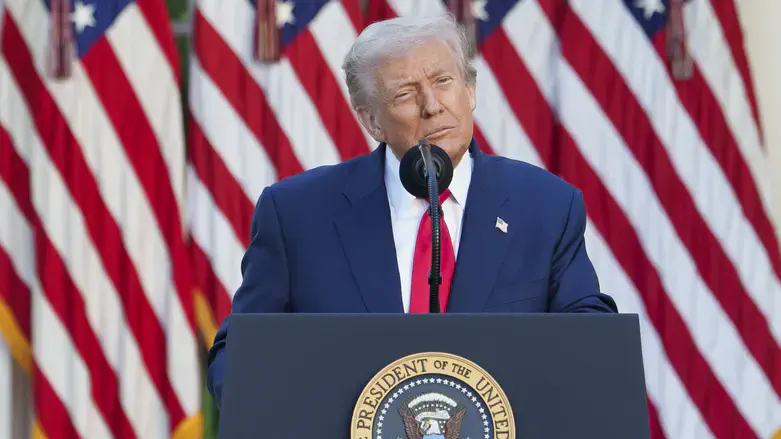
In comments made to reporters while in the room, Trump signaled a hardline approach, saying, "We'll be hitting them very hard. At some point, they're going to say, 'We just can't take it anymore.'"
When asked about the possibility of re-engaging in diplomatic talks, the president added, "I think we just want to win."
Sources noted that expected targets include vital energy facilities, such as oil refineries and electric power plants.
In a statement to CBS News, White House Press Secretary Karoline Leavitt reiterated the administration's stance, "As President Trump said at his cabinet meeting today, the United States will win, and Iran will not have a nuclear weapon under his watch."
Pentagon chief spokesperson Sean Parnell declined to discuss specific targets prior to a final determination by the president.
"The Department of War is locked and loaded, ready to execute the President's directives at a moment's notice," Parnell stated.
Earlier this week, The Wall Street Journal reported that Trump was considering whether to relaunch major military operations against Tehran, with American forces drawing up plans for an intensive aerial assault lasting 10 to 14 days focused on crippling Iran's missile strength.
At the same time, the administration is keeping a scaled-back military option under review, leaving open a potential path for diplomatic engagement.
Trump stated before the WSJ report that the US would strike Iran “very hard" after Iran attacked US bases in Jordan.
“We are going to hit them very hard. I can say that because there is very little they can do about it," he told reporters in the Oval Office.
"We're going to be hitting them very hard, because it’s our turn to hit them. They know it’s coming, they’re asking us not to do it. They tried shooting last night…we had five rockets shot going 8,500 mph, and all five rockets were knocked down to the ground - but they nevertheless took a shot, so it's our turn," Trump stated.
The military options follow discussions earlier this week between Trump and Prime Minister Benjamin Netanyahu. During those talks, Netanyahu outlined three distinct military courses of action, including targeted strikes on overland resupply routes, according to a senior Israeli official. Netanyahu also held separate discussions with Defense Secretary Pete Hegseth.
US forces have previously targeted dual-use infrastructure - facilities serving both civilian and military functions - including bridges. High-level American talks on Friday also explored the possibility of severing power to Tehran, though no final consensus was reached as of Friday afternoon.
(Arutz Sheva-Israel National News' North American desk is keeping you updated until the start of Shabbat in New York. The time posted automatically on all Israel National News articles, however, is Israeli time.)