

The heads of state of France, the United Kingdom, Germany, and Italy late on Sunday night issued a collaborative endorsement of the newly unveiled memorandum of understanding between Washington and Tehran.
The European powers hailed the agreement as a major diplomatic milestone and pushed for a swift, all-encompassing execution of its terms.
The joint declaration extended direct congratulations to the United States, Iran, and the third-party facilitators who guided the back-channel diplomacy, specifically highlighting the efforts of Pakistan and Qatar.
"We warmly welcome the announcement of the memorandum of understanding between the US and Iran. We congratulate the United States, the Iranian government and all those involved, including Pakistan, Qatar, and all other mediators, on this diplomatic breakthrough," the leaders stated, as quoted by the Anadolu news agency.
The quartet of European leaders framed the accord as a pivotal opening to rebuild fractured Middle Eastern stability and inject confidence into the international economy. However, they emphasized that the primary challenge lies in cementing the technical specifics and honoring the overarching framework.
"It is now vital that the detailed negotiations are concluded and this agreement is implemented rapidly and comprehensively. We are ready to support that effort," they added.
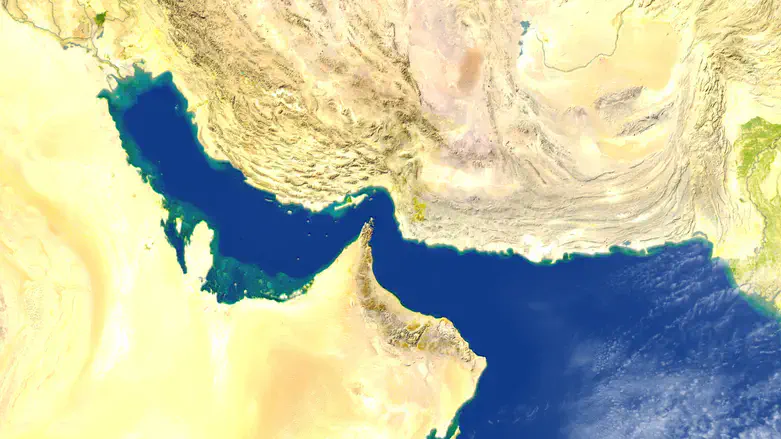
A key priority outlined in the joint communication is the immediate unsealing of the Strait of Hormuz to guarantee "unconditional and unrestricted freedom of navigation," which the nations categorized as an absolute global necessity.
To help secure this vital shipping lane, the four European governments indicated they are prepared to mobilize their own assets. This involvement would materialize via "a strictly defensive and independent mission" tailored to restore confidence for mercantile vessels and carry out crucial bomb disposal and mine-clearance tasks, contingent upon individual domestic constitutional parameters.
Turning to the core nuclear dilemma, the leaders firmly reasserted their long-standing geopolitical boundary regarding Tehran's atomic trajectory, stating that "Iran must never acquire a nuclear weapon." They expressed an immediate readiness to coordinate with the United States, Iran, and the International Atomic Energy Agency (IAEA) to guarantee total compliance with this non-proliferation benchmark.
Furthermore, the four Western powers held out an economic incentive for Tehran, indicating a mutual willingness to scale back existing international sanctions if the Islamic Republic enacts "clear, verifiable steps" to curb and dismantle its atomic apparatus. The document concluded with a commitment from France, the UK, Germany, and Italy to maintain a synchronized diplomatic channel alongside Washington, Tehran, and neighboring Middle Eastern capitals to preserve the diplomatic momentum toward a durable, permanent treaty.