

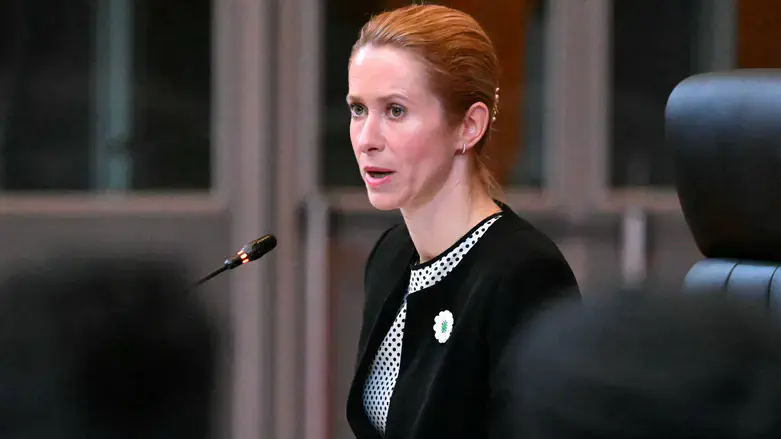
The European Union (EU) has pledged an additional 100 million euros in financial assistance to bolster Lebanon's military, EU Foreign Policy Chief Kaja Kallas announced on Thursday.
The financial injection from the EU arrives at a critical juncture, as a newly established and highly fragile truce between Israeli forces and Lebanon faces immediate destabilization.
In a post on social media, Kallas noted that while the current ceasefire provides a strategic window to avert a resurgence of all-out warfare, recent volatile developments on the ground jeopardize the peace.
Specifically, she warned that the killing of a United Nations Interim Force in Lebanon (UNIFIL) peacekeeper by a Hezbollah mortar shell, alongside persistent border skirmishes, "underscore the tenuous nature of what was agreed".
The underlying diplomatic breakthrough was brokered in Washington on Wednesday, where Israeli and Lebanese representatives consented to a truce. The baseline parameters of the agreement dictate that the cessation of hostilities is strictly dependent upon the Hezbollah terrorist organization completely halting its rocket fire and pulling all of its terrorists out of the South Litani Sector.
However, Hezbollah's top leadership signaled ongoing defiance on Thursday. The group's leader, Naim Qassem, declared that so-called “armed resistance" targeting Israel would persist and vowed that communities in northern Israel would not find safety so long as Israel continues its military presence in Lebanon.
Meanwhile, Lebanese President Joseph Aoun voiced optimism on Thursday regarding the broader diplomatic track. Aoun stated he remains hopeful that the ongoing trilateral consultations in Washington between American mediators, Lebanese officials, and Israeli delegates will produce favorable outcomes. He emphasized that these goals must include a complete withdrawal of Israeli troops from southern Lebanese land, paired with the official deployment of the Lebanese Armed Forces right up to the globally recognized frontier.