
Knesset Member Amit Halevi (Likud), a member of the Knesset Foreign Affairs and Defense Committee, has harsh criticism for the IDF's rules of engagement in Lebanon. Speaking with Arutz Sheva-Israel National News, Halevi says the current procedure does not reflect the political echelon's policies, impedes the forces' operational abilities, and endangers their lives.
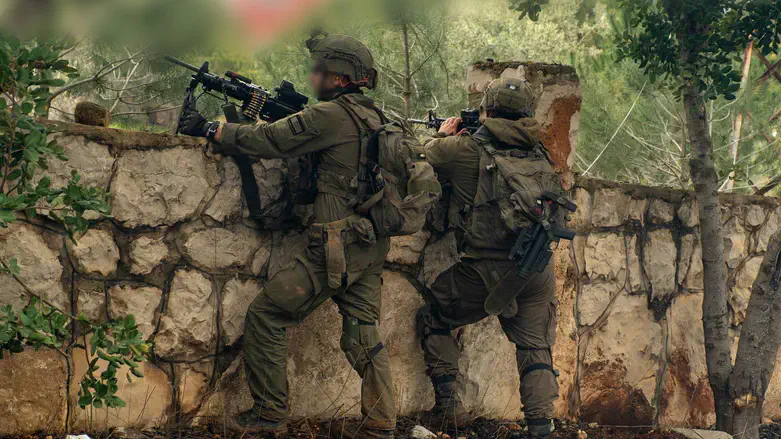
Halevi opens his remarks with a claim he calls "most shocking. He says that within the security zone, IDF soldiers have to clear terrorists out of areas on foot, but do not receive authorization to conduct artillery strikes before entering homes and alleyways. "The military directive is not to conduct precautionary bombardments. It is immoral and unacceptable," he stated.
Halevi mentions an incident where an IDF officer was wounded on the outskirts of Bint Jbeil after the commander of the force asked to carry out a precautionary strike before the troops entered, but was refused. He claims that the directive against precautionary strikes comes from higher ranks, although he believes the decision must change.
According to Halevi, another shortcoming concerns the manner in which threats that develop beyond the yellow line are treated. He asserts that when elimination requests are sent to the Air Force, the decision is delayed for several minutes, during which the terrorists manage to flee. However, if the decision had been at the brigade level, the elimination would have been completed on time.
He says that this policy returns the military to pre-October 7th procedures. "These procedures must change," he said, adding that in one case, two soldiers fell a day after a terror cell was identified in the area because the authorization to eliminate them came too late.
Halevi says that his information came from officials operating in all brigades in the north. "These statistics are known to the IDF. There is nothing here that is imprecise or unknown. We have to change the directives. When there is a threat to our troops, we shouldn't delay and not carry out a roof-knocking procedure," he stated.
He also mentioned an incident that he brought to the Chief of Staff. "They saw ten terrorists getting ready in a house in one of the villages, and instead of taking down the house, they returned to the 'roof-knocking' procedures, even though there were no civilians in the building, even though they had to destroy the building anyway. All this was not done," he claimed.
Halevi places responsibility for the current policy on the IDF Chief of Staff. “The Chief of Staff has one role: victory. He must ensure that soldiers conduct themselves in this manner and that when there is a diplomatic opportunity, he will be able to lead toward a decisive outcome and victory. Today, the procedures are concerning because, based on reports I am receiving from almost all the brigades operating in the north, I identify a weakening and deterioration in the use of fire. We must return to a wartime posture."
According to Halevi, in addition to his appeal to the Chief of Staff, he also contacted the chairman of the Foreign Affairs and Defense Committee and requested that committee members convene despite the Knesset recess. “It is the committee’s duty, especially in days like these, to convene. We will sit together to prepare for such a meeting in which we will demand clear answers from the IDF," he said.