

The United States has sent Iran a 15-point plan to end the war in the Middle East, The New York Times reported on Tuesday, citing two officials briefed on the diplomacy.
It was unclear how widely the plan, delivered by way of Pakistan, had been shared among Iranian officials and whether Iran was likely to accept it as a basis for negotiations. It is also unclear whether Israel is on board with the proposal.
The New York Times did not see a copy of the plan, but the officials, who spoke with the newspaper on condition of anonymity, shared some of its broad outlines, saying that it addresses Iran’s ballistic missile and nuclear programs.
The plan also discusses maritime routes, one of the officials said. Since the beginning of the war, Iran has effectively blocked most Western ships from safely passing through the Strait of Hormuz, the strategic waterway in and out of the Persian Gulf, cutting the global supply of oil and natural gas, and sending the prices soaring.
In a statement, White House Press Secretary Karoline Leavitt acknowledged diplomacy was underway, but said, “As President Trump and his negotiators explore this newfound possibility of diplomacy, Operation Epic Fury continues unabated to achieve the military objectives laid out by the commander in chief and the Pentagon."
Pakistan’s army chief, Field Marshal Syed Asim Munir, has emerged as the key interlocutor between the United States and Iran, with Egypt and Turkey encouraging the Iranians to engage constructively, the officials told The New York Times. Field Marshal Munir is believed to maintain close ties to Iran’s Islamic Revolutionary Guards Corps, putting him in a position to pass messages between the warring sides, they said.
He recently reached out to Mohammad Bagher Ghalibaf, the speaker of Iran’s Parliament and a former Revolutionary Guards commander, proposing that Pakistan host talks between Iran and the United States, said an Iranian official and a Pakistani official, who spoke on condition of anonymity to discuss the sensitive communications.
Field Marshal Munir met twice in 2025 with President Trump, who has showered praise on him, saying he was his “favorite field marshal."
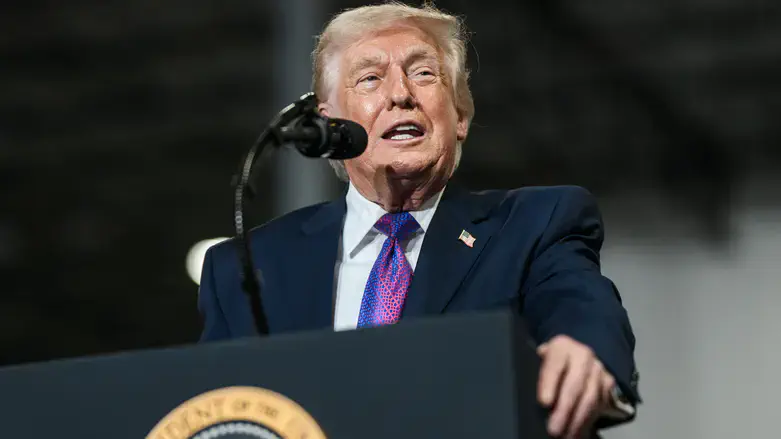
President Donald Trump spoke to the press at the White House earlier on Tuesday about the ongoing war in Iran and claimed that Iran has given the US "a very big present."
Asked why he would engage in talks despite that lack of trust, Trump said, "Because they're going to make a deal. They're going to make a deal."
The President pointed to a recent development as evidence of progress. "They did something yesterday that was amazing, actually. They gave us a present, and the present arrived today. It was a very big present, worth a tremendous amount of money. And I'm not going to tell you what that present is, but it was a very significant prize, and they gave it to us."
On Monday, Trump announced a five-day pause on “any and all military strikes against Iranian power plants and energy infrastructure" to allow diplomatic negotiations between Tehran and Washington, adding that the US is reaching out to “very solid" figures inside Iran.
Subsequent reports indicated that Ghalibaf was representing Iran in the talks with the US, but Ghalibaf denied that any talks were taking place at all.
"Our people demand the complete and humiliating punishment of the aggressors. All officials stand firmly behind their Leader and people until this goal is achieved," Ghalibaf wrote on social media.
According to the speaker, "No negotiations with America have taken place. Fake news is intended to manipulate financial and oil markets and to escape the quagmire in which America and Israel are trapped."