

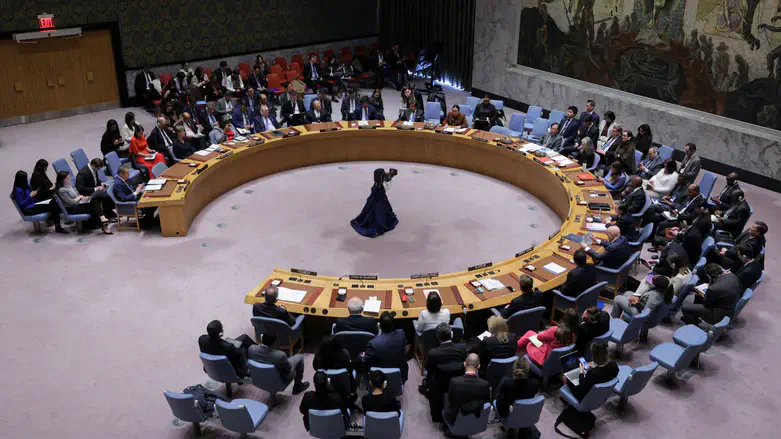
Bahrain has submitted a draft resolution to the United Nations Security Council that would authorize member states to employ "all necessary means" - a diplomatic term indicating the potential use of military force - to safeguard commercial shipping in and around the Strait of Hormuz.
According to the draft text, reviewed by the Reuters news agency on Monday, the proposal is supported by other Gulf Arab nations and the United States.
Diplomats indicated, however, that its adoption appears unlikely due to probable vetoes from Iran’s allies, Russia and China.
The initiative highlights growing regional alarm over Iran's persistent threats to the Strait of Hormuz, a vital strategic passage through which approximately one-fifth of the world's oil supplies flow, forming a cornerstone of Gulf economies.
Iran has long identified the closure of the Strait as a primary strategic goal. Commercial shipping in the waterway has nearly ceased following Iranian strikes on vessels amid its ongoing conflict with the United States and Israel.
The draft declares Iran's conduct a threat to international peace and security. It would permit countries, either independently or via voluntary multinational naval coalitions, to apply "all necessary means" in and around the Strait of Hormuz - including within the territorial waters of coastal states - to guarantee safe passage and block any efforts to obstruct or interfere with international navigation.
The draft text "demands that the Islamic Republic of Iran immediately cease all attacks against merchant and commercial vessels and any attempt to impede lawful transit passage or freedom of navigation in and around the Strait of Hormuz."
Two European diplomats and one Western diplomat stated that the chances of the resolution passing in the Security Council are slim, as Russia and China would likely exercise their veto power if necessary.
US President Donald Trump on Saturday issued an ultimatum to Iran, demanding that it reopen the Strait of Hormuz within 48 hours or face strikes on its power plants.
That ultimatum was set to expire on Monday, but Trump announced it would be extended in order to allow for talks between the US and Iran.
Trump stated that the US is reaching out to “very solid" figures inside Iran to conduct the talks. Subsequent reports indicated that Iran's parliament speaker, Mohammad Bagher Ghalibaf, was representing Iran in the talks with the US, but Ghalibaf denied there were any talks at all.