

Iran is willing to consider compromises in nuclear talks with the United States if Washington is prepared to discuss lifting sanctions, according to Iran's Deputy Foreign Minister, Majid Takht-Ravanchi.
In an interview with the BBC on Sunday, Takht-Ravanchi emphasized that the US must demonstrate sincerity in the negotiations if progress is to be made.
"The ball is in America's court to prove that they want to do a deal," Takht-Ravanchi told the British broadcaster. "If they are sincere, I'm sure we will be on the road to an agreement."
Takht-Ravanchi's comments come ahead of another round of talks between the US and Iran and also amid a tense backdrop of growing US military presence in the Middle East and the threat of military action against Iran if a deal to curb its nuclear program is not reached.
US President Donald Trump has previously warned of strikes against Iran and increased the US military buildup in the region following Iran’s violent crackdown on anti-government protests, which left thousands dead.
The two countries are set to hold another round of discussions on the Islamic Republic’s nuclear program in Geneva on Tuesday. Takht-Ravanchi described the initial talks as "more or less in a positive direction" but cautioned that it is "too early to judge."
One of the main points of contention in the negotiations is Iran's stockpile of 60%-enriched uranium, which is considered near weapons-grade and has heightened concerns that Iran is moving toward developing nuclear weapons. Takht-Ravanchi confirmed that Iran is willing to discuss reducing its uranium stockpile, but only if sanctions relief is part of the conversation.
"We are ready to discuss this and other issues related to our program if they are ready to talk about sanctions," he told the BBC.
Takht-Ravanchi was also asked about the possibility of Iran agreeing to ship its enriched uranium out of the country, as it did under the 2015 nuclear deal, from which Trump withdrew in 2018. While he did not commit to such a move, he stated, "It is too early to say what will happen in the course of negotiations."
Iran's demand for a focus solely on the nuclear issue has been a key part of its negotiating stance. Takht-Ravanchi explained that Iran’s position is clear: "Our understanding is that they have come to the conclusion that if you want to have a deal you have to focus on the nuclear issue." This represents a shift from previous US demands for zero enrichment, which Iran considers a violation of its rights under the Nuclear Non-Proliferation Treaty (NPT).
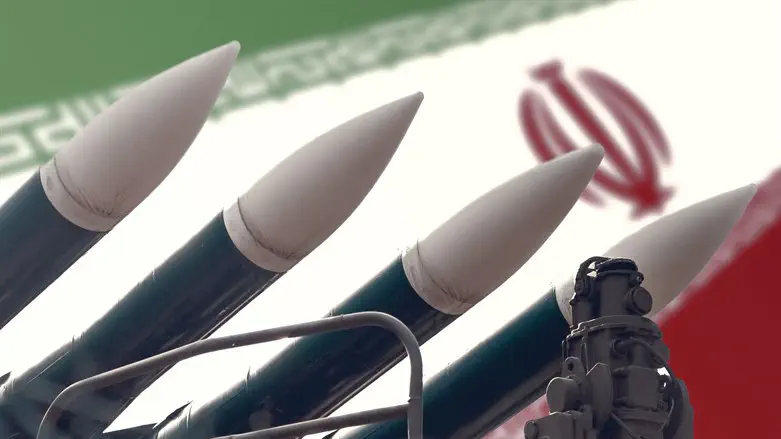
In addition, Takht-Ravanchi reiterated Iran’s refusal to include its ballistic missile program in the talks. The US has demanded that Iran address its missile development, a key concern for Israel, which views Iran's missile capabilities as a direct threat. However, Takht-Ravanchi pointed out the importance of Iran’s defense capabilities, saying, "When we were attacked by Israelis and Americans, our missiles came to our rescue so how can we accept depriving ourselves of our defensive capabilities?"
While Takht-Ravanchi expressed cautious optimism about the ongoing talks, he acknowledged the difficulties Iran faces in negotiating with the US. He expressed concerns about mixed signals from Washington, particularly regarding Trump’s focus on regime change. "We are hearing that they are interested in negotiations... but we are not hearing that in the private messages," he said.
The diplomat also warned that another military conflict would have dire consequences for the region, stating, "If we feel this is an existential threat, we will respond accordingly."
Despite the ongoing tensions, Takht-Ravanchi stated that Iran remains hopeful for a diplomatic resolution. "We will do our best but the other side also has to prove that they are also sincere," he concluded.