

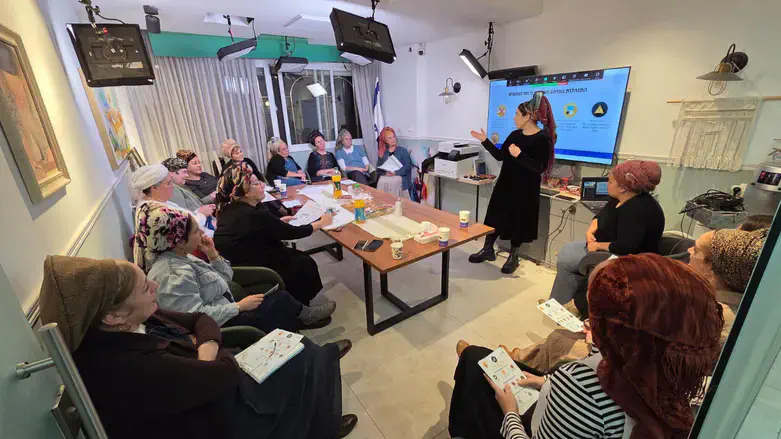
One month after a group of community Rabbis completed a unique course on dealing with sexual abuse, this week a group of rabbis' wives (often called "rebbetzins" or rabbaniyot) completed a similar training program, which was held at the initiative of the Sexual Abuse Beit Din established by Rabbi Shmuel Eliyahu.
The pioneering course, titled “Rabbis' Wives Creating a Protected Community," is designed to provide rabbinic and professional tools enabling them to accompany and guide cases of sexual abuse within their communities. Participants received practical tools, based on the understanding that they can assist in relevant cases in their communities and help create protected communities throughout the country.
The training lasted several weeks. Representatives of the Beit Din noted that “many times, perpetrators take shelter under the auspices of Torah, and the abuse is carried out in the name of halakha. When a rabbi comes with rabbinic backing, broad spiritual authority, and professional knowledge, and provides support and guidance to victims, it enables them to breathe again. Above all, it sends a clear message to the community: such acts will not be met with silence in our community."
Both courses included between 10 and 12 sessions, during which participants learned various topics related to sexual abuse, the behavioral patterns of perpetrators, and the impact of abuse on victims. Among the data presented were findings that one-third of women experience sexual abuse, and that more than 80% of cases are initiated by someone known to the victim.
Participants were also exposed to information about mandatory reporting laws, and about the assistance provided to victims and their families by state authorities.
The Beit Din emphasized that conveying messages of safeguarding also serves as a warning to perpetrators, who often test where tolerance or a lack of response exists. “Victims, for their part, understand that in this community it is permitted to speak and to share, because there is someone who will listen without judgment or blame, and who will also extend a hand and accompany a proper, professional process of healing. Community rabbis and their wives have a key role in all of this. We appreciate and thank all the participants, and hope for the day when processes of healing in cases of abuse will be an integral part of communal life."