

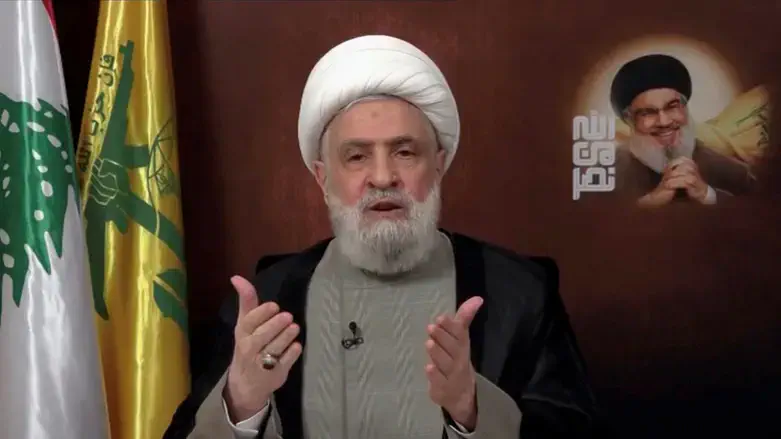
Hezbollah leader Naim Qassem declared Sunday that his Iran-backed group would not surrender or lay down its weapons in response to Israeli threats, despite mounting pressure for the Lebanese group to disarm, AFP reported.
His defiant stance comes ahead of a critical visit by US envoy Thomas Barrack, during which Lebanese authorities are expected to address a request for Hezbollah's disarmament by year's end.
Speaking to thousands of supporters in Beirut's southern suburbs during the Shiite Muslim commemoration of Ashura, Qassem asserted, "This (Israeli) threat will not make us accept surrender." He reiterated that Hezbollah terrorists would not abandon their arms, insisting that Israel's "aggression" must first cease.
The IDF has continued to occupy positions in Lebanon and conduct strikes, stating it targets Hezbollah sites and terrorists. Jerusalem accuses Beirut of failing to enforce the November ceasefire, which aimed to end last year's hostilities.
The ceasefire stipulated Hezbollah's withdrawal north of the Litani river and Israel's full troop withdrawal, though Israel has maintained deployment in five strategic areas.
Qassem demanded Israel abide by the ceasefire, "withdraw from the occupied territories, stop its aggression... release the prisoners," and facilitate reconstruction in Lebanon. Only then, he stated, "will we be ready for the second stage, which is to discuss the national security and defense strategy" that includes disarmament.
Further underscoring the group's unwavering position, Qassem affirmed that his movement "will not accept normalization with the Israeli enemy," following recent remarks from Foreign Minister Gideon Sa’ar expressing interest in such a move.
Recently, the leaders of Hezbollah and Shiite group Amal convened to discuss the situation in the Middle East amid the war between Iran and Israel and developments in Lebanon.
According to a report by Al Akhbar, the two organizations condemned Israel's attack on Lebanon, which they referred to as "desperate attempts to attack the Axis of Resistance and harm the will of free states."
In a bilateral statement published after the meeting, the organizations noted that Iran would continue to be the strong foundation of the fight against the plan to achieve hegemony and colonialism.
Regarding the internal situation in Lebanon, the organizations stressed the importance of rehabilitating the areas that were harmed by "Israeli aggression," classified the goal as a national priority.