
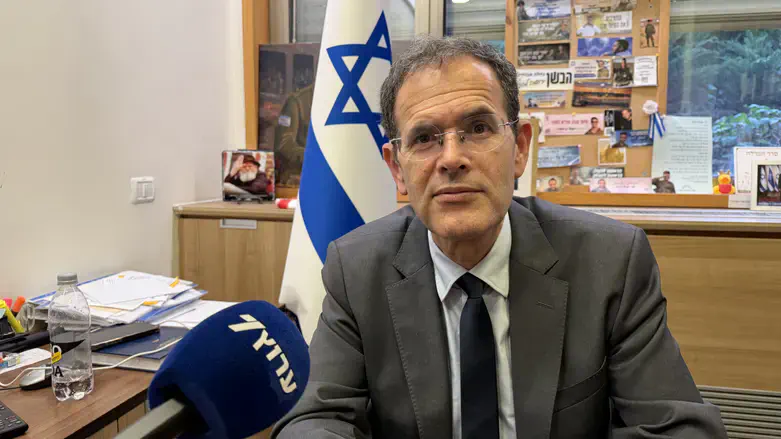
Likud MK Moshe Saada, a former deputy head of the Police Internal Investigations Department, describes developments in Benjamin Netanyahu's trial, saying, "The prime minister is, in effect, going from being the accused to being the accuser".
In an interview with Arutz Sheva following Attorney General Gali Baharav-Miara's appearance before the panel of judges, Saada predicted that the bribery case would end in an acquittal and leveled serious allegations against investigators and prosecutors.
Saada said, "What happened in court today was simply an earthquake. I would put it less delicately-a live, public dressing-down of Gali". In his view, the judges' remarks about the difficulties in Case 4000 reflect a clear position on the prospects of a conviction on the bribery charge. He claimed, "The flagship case, Case 4000, a bribery case, ten years in prison-it doesn't exist", and predicted, "There will be a complete acquittal here".
Saada also addressed the doubts the judges expressed about Case 2000 and their call to seek an end to proceedings in the gifts case. He argued that the developments reinforced the criticism he has voiced for years against senior law enforcement officials, saying, "Everything we have seen here is the fabrication of cases, the fabrication of a bribery case, the fabrication of a breach of trust case in Case 2000". Regarding Case 1000, Saada said former Attorney General Avichai Mandelblit had previously told him that the gifts affair alone would not have led to an indictment.
In Saada's view, one of the most significant aspects of the hearing was the judges' insistence that Baharav-Miara appear in person. Drawing on his experience in law enforcement, he explained that when judges identify problems with an indictment, they generally convey their concerns to prosecutors discreetly through professional discussions. This time, he argued, the judges chose an unusual approach after earlier messages failed to change the prosecution's position, saying, "They could have written this to her. They brought her to court to give her a live, public dressing-down, so she would understand where they are heading".
Saada believes the judges are seeking to give the attorney general an opportunity to end the trial by agreement before they have to write a verdict. He described the message he believes they intended to convey to her as follows, "Cut your losses, agree to whatever deal you can, don't make us write a verdict, because that verdict will be an 'I accuse' against you".
However, he predicted that Baharav-Miara would reject the judges' proposal and choose to continue the proceedings. Saada argued that withdrawing the indictment after years of trial would be a difficult step for prosecutors, saying, "From what I know of Gali, what she will do is say that the court is in the wrong, and they will go all the way".
If no agreement is reached, Saada expects Netanyahu's lawyer, Amit Hadad, to invoke the abuse-of-process defense and seek his acquittal on all charges. He raised a series of serious allegations concerning the conduct of investigators and prosecutors, including extortion through threats, forgery, the use of spyware, illegal wiretapping and obstruction of justice. He said that what he described as contradictions between Mandelblit's statements and those of prosecutor Yehudit Tirosh also raised serious questions.
Asked about the possible implications of the developments in the trial for talks on forming a government, Saada declined to offer an immediate assessment of their political impact, but pointed to what he said was the trial's social cost over the years. He said, "Let me remind you of the rift, the division, the ruptures, the demonstrations, the terrible things that happened over a decade", also referring to boycotts and the rhetoric surrounding the most recent election campaign.
Later in the interview, Saada criticized the opposition bloc over a bill that he said was intended to repeal the legislation he had advanced concerning the Police Internal Investigations Department. He said his legislation was intended to allow investigations into suspected misconduct by senior law enforcement officials, including Roni Alsheikh, Shai Nitzan and Avichai Mandelblit. Saada made clear that despite the political opposition, he intended to continue advancing the legislation, saying, "The Police Internal Investigations Department law, too, will come into being, God willing, and God willing, the offenders will be brought to justice".