

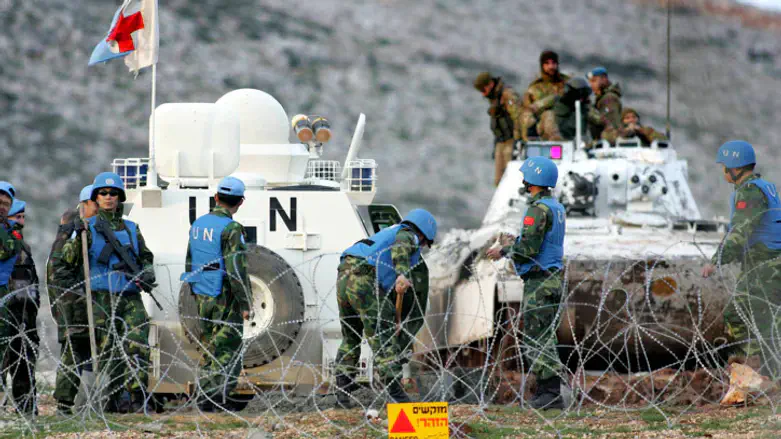
The United Nations Interim Force in Lebanon (UNIFIL) has expressed concern over a potential security vacuum in southern Lebanon following the expiration of its mandate at the end of December.
Speaking to Sky News Arabia, UNIFIL spokesperson Tilak Pokharel said the peacekeeping force would remain fully operational through December 31, 2026, before beginning its withdrawal on January 1, 2027.
He noted that no UNIFIL positions have yet been transferred to the Lebanese authorities or military as part of the withdrawal process.
Under UN Security Council Resolution 2790, unanimously adopted in August 2025, UNIFIL received a final extension of its mandate, with its complete withdrawal scheduled for the end of 2027.
Pokharel acknowledged that transferring UNIFIL positions to the Lebanese Armed Forces would be difficult under current conditions. He claimed that any Israeli military presence north of the Blue Line constitutes a violation of Resolution 1701 and reiterated the mission's calls for an Israeli withdrawal.
The spokesperson described the security and humanitarian situation in southern Lebanon as "extremely fragile," citing ongoing IDF operations, widespread destruction, and the presence of landmines.
According to Pokharel, between 10,000 and 15,000 residents remain in areas near the Blue Line, while tens of thousands of displaced residents have been unable to return to their homes.
Asked whether the Lebanese army was prepared to assume responsibility for security in the region, Pokharel pointed to decades of cooperation between UNIFIL and the military but said the Lebanese army itself was best placed to assess its readiness.
He stressed the importance of an orderly transition, warning that a security vacuum could further complicate the situation in southern Lebanon.
Established in 1978, UNIFIL's mandate was expanded following the 2006 Second Lebanon War to include monitoring the cessation of hostilities and supporting the deployment of Lebanese troops in the south.
Israel has repeatedly criticized UNIFIL for its failure to enforce Resolution 1701 and prevent the Hezbollah terrorist organization from establishing military infrastructure near the Israeli border.
Last week, Israeli Ambassador to the UN Danny Danon led a delegation of UN ambassadors on a security tour of Israel's northern border, where military officials briefed the diplomats on Hezbollah's efforts to rebuild its military capabilities, particularly its drone arsenal.
Danon accused Hezbollah of exploiting UNIFIL's presence to establish positions near the Israeli border and carry out attacks against Israel.
"We do not rely on any international force. We trust only our own soldiers," Danon stated.
Earlier this month, the IDF reported discovering Hezbollah weapons stockpiles and military infrastructure between 100 and 250 meters from UN positions in southern Lebanon.
The IDF said the discoveries provided further evidence of UNIFIL's failure to fulfill its mandate and of terrorist organizations exploiting its inaction.
Lebanese authorities are seeking an alternative international or European presence following UNIFIL's departure. Israel and the US, however, oppose the deployment of another international military force in southern Lebanon.
Earlier this month, G7 foreign ministers called for new security arrangements in Lebanon but failed to reach an agreement on a replacement for UNIFIL.
French Foreign Minister Jean-Noël Barrot said the participating countries shared the objectives of securing an Israeli withdrawal, disarming Hezbollah, and restoring the Lebanese government's exclusive authority over weapons in the country.
While European governments have considered various proposals for a continued international presence, US Secretary of State Marco Rubio indicated that future arrangements might not require the deployment of a traditional military force.