

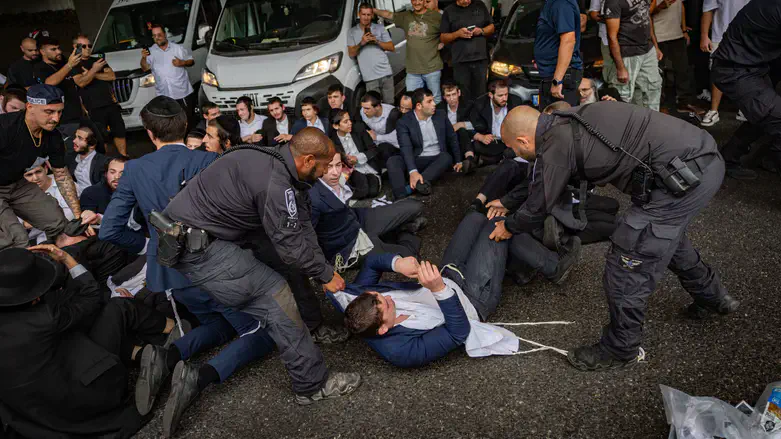
The IDF is preparing to intensify enforcement against tens of thousands of haredi men who have failed to report for military service, with some facing criminal prosecution and prison sentences of up to six months. According to newly released figures, approximately 80,000 to 90,000 young haredi men who previously held exemptions or deferments as full time yeshiva students have received draft orders since the implementation of conscription orders following a Supreme Court ruling roughly two years ago.
Of those, around 64,000 have failed to respond to the first, second and third summonses and are now classified as deserters by the military authorities. Until now, those arrested for draft evasion have generally faced relatively short periods of military detention, typically between two and three weeks in military prisons. However, military legal officials are now considering expanding the use of more severe criminal proceedings.
Under the current criteria, cases are referred to the Military Advocate General's prosecution division when 540 days have passed since the initial reporting order without the individual appearing for service. Those prosecuted through this route face potential prison sentences of between three and six months. As more than two years have passed since the mass issuance of draft orders began, the number of individuals reaching the threshold for criminal prosecution continues to grow.
The military is also examining a proposal to significantly shorten the period before a case is referred for criminal prosecution, reducing it from 540 days to 365 days. If approved, the change would expose a substantially larger number of young men to criminal proceedings, including those who have failed to report for a year. The latest figures indicate that the total number of deserters across all groups of draft evaders exceeds 76,000.
The proposed measures come alongside a series of administrative and financial sanctions introduced in recent months, including restrictions on funding for educational institutions and the withdrawal of certain benefits. The measures are intended to enforce the Military Service Law across the population.