


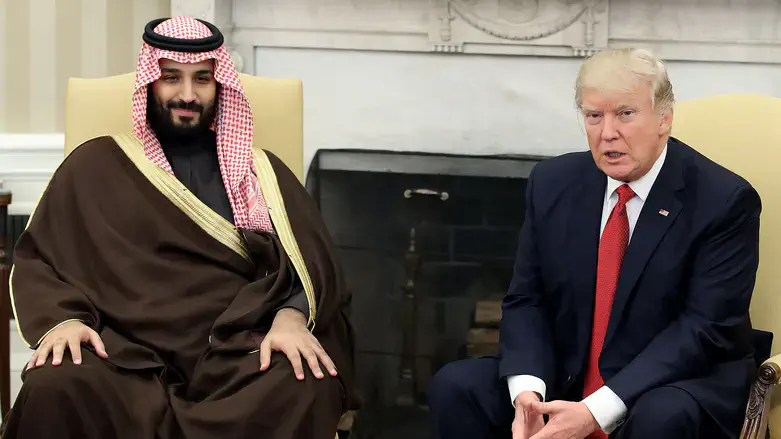
US President Donald Trump has formally sent Congress the recently signed civil nuclear cooperation agreement with Saudi Arabia, a US administration official told Reuters on Tuesday.
The official said Trump remains firm that the agreement will proceed only if Saudi Arabia joins the Abraham Accords and establishes formal relations with Israel.
The United States and Saudi Arabia signed the civil nuclear agreement in late July. The deal is expected to give American companies substantial commercial opportunities as Saudi Arabia develops its nuclear energy sector. US officials have said the agreement will support American manufacturing, industrial workers and domestic supply chains while helping Riyadh meet its long-term electricity needs.
The administration has also said the agreements will strengthen nuclear safety, security and nonproliferation standards, while improving the competitiveness of the US civil nuclear industry and contributing to security in the Middle East.
Trump subsequently made clear that he views the nuclear agreement as tied to Saudi Arabia joining the Abraham Accords.
Speaking to reporters in the Oval Office two days after the nuclear deal was signed, Trump said, “I just say that in order to do it, they have to be a member of the Abraham Accords, which have been very successful. But it's time now that they do it."
“They and others didn't want to do it because of the problem that they had with Iran. You don't have that problem anymore. You don't have a great power there anymore," continued the President.
“You have a problem, but the problem is disappearing day by day. They were the bully of the Middle East. They were not going to be that much of a bully anymore, probably," he said of Iran.
“At some point they'll join [the Abraham Accords]," the President continued, referring to Saudi Arabia. “They'll join, and they'll do their civil nuclear, no enrichment, it's civil nuclear."
The Abraham Accords are US-brokered agreements that established diplomatic relations between Israel and several Arab countries. The United Arab Emirates and Bahrain became the first signatories in 2020, marking the first formal normalization agreements between Arab states and Israel since Jordan established ties with Israel in 1994.
Morocco and Sudan subsequently joined the framework, although Sudan's full ratification was delayed by domestic instability. Kazakhstan joined the agreements in January of this year.