
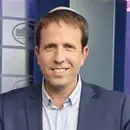
US Ambassador to Israel Mike Huckabee addressed Iran, Syria, Hamas and the future of Gaza, violence in Judea and Samaria, Israeli sovereignty, antisemitism in the United States, Israel's elections and his experience as ambassador in a wide-ranging special interview with Israel National News-Arutz Sheva.
Iran: 'Maximum financial pressure'
Asked about US President Donald Trump's latest declaration of an economic campaign against Iran, Huckabee said he expects the President to apply "maximum financial pressure" on Tehran, as he did during his first term.
"Iran is deeply weakened because of the epic fury that happened earlier in the spring," Huckabee said. "They're hurt militarily. They're hurt economically. They're certainly hurt diplomatically. But they're not willing to give up that quickly."
He compared Iran's refusal to acknowledge its weakened position to the Black Knight scene in Monty Python and the Holy Grail, in which the character continues to insist, "'Tis but a scratch," despite suffering devastating blows.
Huckabee stressed that Iran's threats against Israel and the United States should be taken seriously.
"These are not empty words of threats and waving a sword in the air. These are people that really do want to kill us," he said, pointing to Iran's financing and support for Hezbollah, Hamas and the Houthis.
Asked whether the Iranian regime could ultimately be toppled, Huckabee said he believes that remains possible, but that external military and economic pressure would have to be accompanied by an internal uprising by the Iranian people. He noted the danger facing protesters in Iran, where those who challenge the regime can be shot, imprisoned or hanged.
Regarding possible differences between Israel and the US on Iran, Huckabee said he does not believe there are "any significant differences."
He noted Trump's positions on Iran's missile inventory and reiterated the President's demands: "No enrichment, no nuclear weapon." He also said Trump has made clear that the Strait of Hormuz must remain open.
"I can't really think of any differences between his message and his doctrine and strategy and that of Israel," Huckabee said.
Syria and Turkey
Turning to Syria, Huckabee addressed the Israeli strike on Syria's Abu al-Duhur airbase, which Israel connected to concerns over the expansion of Turkish military activity in the country.
"When Turkey begins to move military forces further south, that appears to be a threat to Israel, and they're not going to just stand by," he said.
Huckabee compared the strike to a baseball pitcher throwing close to a batter who is crowding the plate in order to force him to move back.
He acknowledged that Turkey's situation differs from Iran's, noting that Turkey is a NATO member and has good relations with the US. Nevertheless, he said that the movement of Turkish military assets deeper into Syria "is not good for Syria, it's not good for Israel, it's not good for the world."
Describing the Israeli action, Huckabee noted that munitions were dropped on an airfield without casualties and characterized it as "a shot across the bow" rather than an attempt to begin a wider confrontation.
Asked whether the US supported the strike, he said: "I don't know that the US has taken a position one way or the other. Certainly not publicly."
Huckabee said the US wants calm in the region, wants Syria to succeed and hopes Syria will reach a security agreement with Israel. He added that such progress would not be helped by Turkey appearing to establish a firm foothold in Syria.
Hamas: 'Your time is up'
Huckabee also responded to criticism from bereaved Israeli families over direct contacts between US envoy Jared Kushner and senior members of the Hamas terrorist organization.
He said he understood the criticism but explained that the purpose of the meeting was to deliver the American position directly, rather than through mediators such as Qatar, Egypt or Turkey.
According to Huckabee, the message was that Hamas is expected to fulfill what it agreed to: disarm, demilitarize and recognize that it has no future in Gaza.
"It was boldly said and forthrightly said to them: Your time is up," Huckabee stated.
Asked whether the US still regards Hamas as a terrorist organization, Huckabee responded: "Absolutely."
"They're a terror organization. They're not a government. They're savages. What they did on October the 7th is the unspeakable horror of this generation," he said.
He added that the US remains steadfast in recognizing Israel's right to act against Hamas.
Asked about the American vision for the future of Gaza, Huckabee rejected the idea that Washington believes Hamas has changed.
"Nobody in the United States is naive enough to think that Hamas is going to change their ways," he said. "We know who they are. We saw what they did. They haven't changed."
Huckabee emphasized that Hamas has yet to surrender any of its weapons.
"How many guns have they given up?" he asked. "Well, the number is zero. Not a pistol, not a rifle, not one, not even so much as a slingshot."
Addressing Prime Minister Benjamin Netanyahu's opposition to a revised plan, Huckabee distinguished between what he described as a 15-point revision and the original 20-point plan, which begins with Hamas disarmament.
He said Netanyahu has been a partner in the peace-plan process, including efforts involving the International Stabilization Force and the CMCC, while maintaining Israel's security requirements.
"Israel has been incredibly cooperative, but never at the expense of their national security," Huckabee said. "That's where the line is drawn."
These are not settlers. These are unsettlers
The Ambassador was also asked about his use of the term "terrorists" to describe a small number of Israelis involved in violence in Judea and Samaria.
Huckabee stood by the characterization.
"It is terror when you try to change the behavior of people through acts of intimidation, acts of violence, when you burn people's cars and their homes," he said.
He stressed that the perpetrators represent only a tiny fraction of the approximately half-million Israelis living in Judea and Samaria, estimating that 300 to 500 people at most are involved in such activity, with many not even residing in the area.
"No one is doing more damage to the reputation of Israel and the Jewish people than this little band of people who are doing criminal acts," he said.
Huckabee rejected describing them as vigilantes, saying that attacking a Palestinian simply for living in his home is not an act of revenge for a crime.
"That's being a criminal, a thug, a terrorist. I take nothing back from that," he said.
He also rejected the broad term "settler violence."
"I don't like to use the term settler violence because I say these are not settlers. These are unsettlers," he said, describing them as people who are making it more difficult for Israelis in Judea and Samaria to live peacefully and raise their families.
Huckabee also discussed a longstanding international security mechanism operating in Judea and Samaria, involving the US, Israel, Palestinian police and several other countries.
He said its role is not policing but deconfliction, working with Israeli and Palestinian forces to identify problems and seek solutions.
"This violence is wrong. It doesn't matter who does it," he said.
Asked about the possibility of Israeli sovereignty in Judea and Samaria, Huckabee said that "ultimately, that's going to be something that'll be up for the state of Israel to decide."
At the same time, he said the American emphasis at present is on avoiding greater regional tension.
"There's a time and there's a place," he said. "There's a lot of tension in the region. Nobody wants to see that tension erupt into something far greater."
Huckabee connected the issue to violence in Judea and Samaria, warning that criminal activity by a small group is harming Israel's international standing and could make future consideration of sovereignty more difficult.
Asked whether he personally hopes to see Israeli sovereignty in Judea and Samaria, Huckabee declined to offer a personal position.
"One of the challenges of being an ambassador, I don't get to have a personal opinion," he said. "My job is to carry out American policy."
He described current US policy as seeking to maintain order and prevent an escalation of conflict, violence and instability.
Antisemitism in the US: 'It's Jew hatred'
Addressing rising antisemitism in the United States, Huckabee said the phenomenon is difficult to combat because of foreign funding and influence, including what he described as funding from Muslim Brotherhood-affiliated states and activity by China and Russia on social media.
He also argued that Israel needs to improve its ability to fight what he called the "message war."
"When people use the term antisemitism, I've decided that it's a term that has almost caused people to be numb," Huckabee said. "So I just call it what it is. It's Jew hatred."
He called it "a blood libel against the Jewish people" and questioned the irrationality of hostility toward the world's small Jewish population.
Huckabee proposed several ways to counter the phenomenon: becoming more aggressive in presenting Israel's message, bringing people to Israel so they can see the country for themselves, improving education in the United States, and challenging misinformation on social media.
"No better way to counter the nonsense and the lies of genocide and apartheid than for people to come here and see it," he said.
He also criticized foreign funding of American universities and said that many people under 35 receive their news primarily through TikTok, X and Instagram, where, he said, information is "rarely credible."
Trump, Netanyahu and the Israeli elections
Asked about Trump's statement that he believes it is appropriate to stay out of Israeli elections but that he may nevertheless endorse someone, Huckabee responded with a phrase frequently used by the President: "We'll see."
Huckabee said Trump cares deeply about Israel's future and understands its strategic value to the US. However, he emphasized that he himself is prohibited by US federal law from becoming involved in an Israeli election.
"The president has the freedom if he wants to," Huckabee said. "And whether he decides that it would be helpful or hurtful, I think that'll be the basis on which he decides."
Huckabee also described the relationship between Trump and Netanyahu as exceptionally close.
"I don't think there's any world leader with whom he's had a stronger, more personal relationship," he said, noting Netanyahu's repeated visits to the White House since Trump began his second term.
"Their relationship is not just a statecraft relationship. It is a deeply personal one."
Huckabee said he did not know whether that relationship would lead Trump to issue an endorsement. He added that if Netanyahu is not reelected, he hopes whoever succeeds him will recognize and strengthen the partnership between Israel and the US.
Asked about Trump's pressure on President Isaac Herzog to grant Netanyahu a pardon, Huckabee said Herzog has processes and procedures he must follow.
"He's a man of integrity," Huckabee said. "And I have great respect for President Herzog."
He said he believes Herzog will take his time, consider the relevant processes and make the decision he believes is best for Israel.
"I have total confidence in his integrity to do that," Huckabee added.
Regarding the increasingly electoral atmosphere in Israel, Huckabee said he could feel it clearly, drawing on his own decades of experience in American politics.
"I find that the Israeli politics are even more contentious at times," he said, adding that being in the middle of the political atmosphere can be enjoyable, though "it's better not to be the candidate."
'It never gets old'
Concluding on a personal note, Huckabee reflected on his year and a half serving as US Ambassador to Israel and more than 100 previous visits to the country over 53 years.
"It never gets old. I'm never bored, that's for sure," he said.
He described Jerusalem as "a very lovely, livable and incredible place to be," adding: "I think it's the epicenter of the earth."
Asked what he has learned during his tenure, Huckabee pointed first to the professionalism of the US Embassy staff, saying he had been pleasantly surprised by the quality of the team.
His second lesson, he said, was an even deeper appreciation for the resilience of Israelis.
"I always knew about the resiliency of the Israeli people," Huckabee said. "But when you're here for an extended period of time, and a year and a half, I've been through five wars, I cannot tell you how blown away I am."
He pointed to Israel's economy and construction activity as signs of that resilience and concluded by recalling Golda Meir's response after the 1973 Yom Kippur War when asked about Israel's "secret weapon": "We have nowhere else to go."
Huckabee said that statement reflects what he sees as Israelis' determination to remain in their country.
"There is not just a raw resilience, but there is a rigid determination that the Israelis as a country and the Jewish people know that this is their last refuge," he said. "They don't plan on going anywhere."