

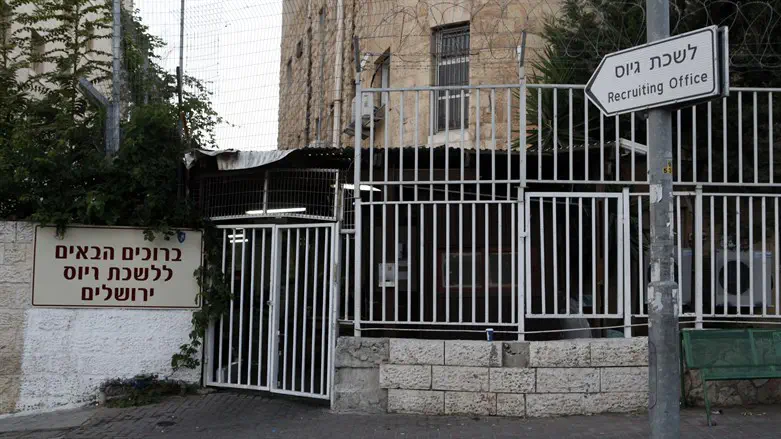
The office of Knesset Deputy Speaker Limor Sohn Har-Melech (Otzma Yehudit) has received appeals from young people who completed the screening and preparation process for combat service, with some even assigned to elite IDF units, only to have their enlistment blocked on the day they were due to enter the army.
According to the appeals, the young men arrived at their induction base as scheduled and boarded buses for their assigned units. Only then were they informed that the ISA had objected to their military service.
The appeals, submitted by the young people and their families, described months of preparation and strong motivation to serve in meaningful combat roles before their paths to the IDF were abruptly halted at the induction base.
Following the reports, Sohn Har-Melech sent an urgent letter to Defense Minister Israel Katz, Foreign Affairs and Defense Committee Chairman Boaz Bismuth, and ISA Director David Zini. She called on them to examine the cases, investigate the criteria behind such decisions, and review the policy governing the prevention of enlistment.
Sohn Har-Melech described the situation as “a serious and alarming escalation," noting that previous cases brought to her office involved candidates whose enlistment was blocked at earlier stages of the process.
“From previous appeals that reached my office, we identified cases in which candidates for service faced prevention already in earlier stages, not in the induction office," she wrote. “Now we are exposed to a situation in which young people go through the conscription process, prepare for service, arrive on the designated day at their induction base, and only there, at the last moment, their boarding of the buses is prevented. It is difficult to describe the intensity of the sense of collapse experienced by young people who prepared themselves for months and years to fight for the State of Israel, and discover on draft day that the state they sought to protect does not even allow them to wear uniforms," she said.
“As a member of the Foreign Affairs and Defense Committee, we hear again and again from IDF commanders about a manpower shortage, the heavy burden placed on the soldiers, and a shortage of manpower that does not allow a response to all security tasks," she wrote.
“Against this reality stand excellent young people, filled with mission, with abilities and motivation, who are asking for one thing: to enlist, to fight, and to contribute to the people of Israel and the security of the State."
She further called for any decision to prevent an individual from serving to be based on specific, reviewable allegations.
“To the extent that there are concrete claims against any of the service candidates, they must be based, individual and subject to review," Sohn Har-Melech wrote. “It is not possible to accept a situation in which a vague decision by a security authority determines the future of a young perSohn, preventing him from meaningful service and stigmatizing him, without giving him the opportunity to understand what is being claimed against him and to confront the allegations."
At the conclusion of her letter, Sohn Har-Melech called for an examination not only of the individual cases but of the broader policy.
“I request your immediate intervention to examine the cases brought before us, to clarify the criteria on which decisions of this type are made, and to reexamine the policy itself that allows preventing highly motivated young people from enlisting in the IDF in this manner. These young people want to fight for the state. Our duty is to open the door for them, not to close it."