

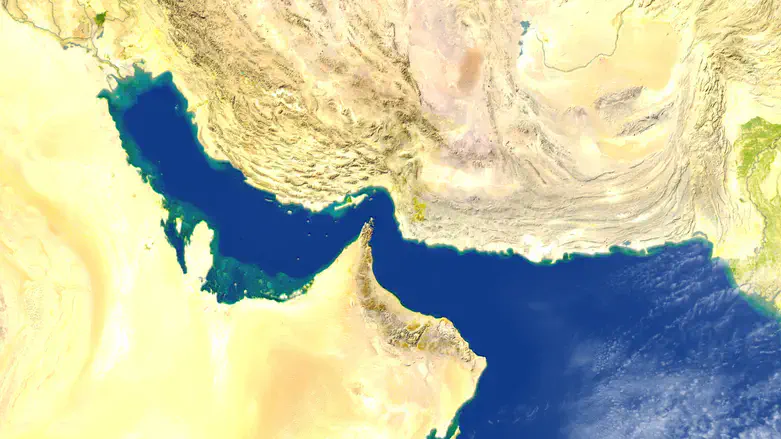
Oman has reached an agreement with Iran on the framework of a deal to temporarily reopen the Strait of Hormuz, the critical global oil transport corridor that Washington and Tehran have contested since conflict broke out, two Middle Eastern diplomats familiar with the discussions told MS NOW on Thursday.
While the diplomats refrained from revealing specific terms or remaining points of contention, an Iranian official connected to the negotiations told MS NOW on Thursday morning that the arrangement will outline fresh transit lanes.
Under the proposal, commercial vessels would enter the Persian Gulf via an Iranian-monitored lane and exit through a lane managed by Oman.
The Iranian official noted that the deal excludes the collection of passage fees from commercial traffic seeking safe transit- a condition Iran had previously pursued.
Described as a "temporary agreement," the plan is intended to pave the way for Washington and Tehran to enact a fresh ceasefire and restart nuclear negotiations, which originally launched in mid-June before collapsing amid mutual retaliatory strikes that left four US service members dead in Jordan.
The Iranian representative stated that both the US and the United Nations International Maritime Organization will participate in the formal rollout of the accord. Furthermore, a separate Gulf government official familiar with the talks told MS NOW that member states of the Gulf Cooperation Council have endorsed the compromise.
Authorities have not yet specified a timeline for the public announcement.
US backing for the maritime management arrangement remains contingent on the final wording. A US official indicated that Washington will endorse a short-term arrangement only if it restores unhindered passage through the waterway without fees.
“Any temporary routes will be without any impediments - meaning no approvals or permissions and no tolls or charges," a US official speaking on the condition of anonymity told MS NOW.
“The Strait of Hormuz is an international waterway, and no party controls the lanes or the ability to transit through them," the official added.
President Donald Trump has previously expressed resistance toward any arrangement that expands Iranian jurisdiction over the corridor. However, the accord could offer a path toward restarting bilateral talks regarding Tehran’s nuclear program after an earlier foundational agreement fell apart in June due to Iranian strikes on ships in the passage.
Though Trump has occasionally floated the concept of the US levying fees on transiting vessels, that policy has not been enacted.
Addressing journalists Thursday afternoon from the Oval Office, Trump remarked that the passage is “sort of open right now," while noting that the US maintains a blockade.
“I think we’re doing fine," he remarked, subsequently noting that an official update regarding the corridor “could be soon."
On Wednesday, Trump addressed the ongoing confrontation with Tehran during an appearance in Nevada, indicating that American forces are “knocking the hell out of them" while maintaining that his overarching objective remains securing a diplomatic resolution.
“I would rather make a deal because I don't want to kill people," the President stated, adding, “We were set for the biggest attack of any attack, and we've hit them very hard for the last few months, but we were all set for the biggest attack since World War II. And they called me, and they said, ‘Please don't do it, let's talk. And then they said, we never said that."
“But we are talking, let's see what happens. But they respect us. They respect us," he said, continuing, “It's been 50 years. And no other president has done what you should have done a long time ago, because Iran cannot have a nuclear weapon."
The Nevada remarks mirrored statements delivered by the President during a Tuesday night interview on Fox News, where he confirmed active communications with Tehran and warned of further military actions if international shipping routes remain obstructed.
“Iran will never have a nuclear weapon. They already can't, but it's going to be formal. The Strait's going to be open very soon, or they're going to get hit very hard, and then the Strait's going to be open," he said in the interview.
Describing ongoing contact, he asserted that both sides are “having very good discussions" before addressing denials issued by Iranian representatives: “They don't like to admit that, but you know it's a little bit disconcerting. You tell people ‘we’re having wonderful discussions’ and then some guy will come out of Iran and say ‘We have not met.’ It’s a lie. They want to make a deal."
When asked at what point negotiations would be deemed exhausted, Trump remarked, “I have plenty of time."