
On the morning of October 7, public attention focused primarily on the breached border fence, the communities that were overrun, and the thousands of terrorists who infiltrated Israel by land.
According to Brig. Gen. (res.) Oren Solomon, who headed the war investigation team for the Gaza Division, a large-scale maritime assault was unfolding simultaneously. It included a strategic threat that remains largely unknown to the public and, he says, a disaster that could have been far greater was narrowly averted.
In an interview with Arutz Sheva, Solomon revealed details from the Israeli Navy's internal investigation, which he claims received insufficient public attention and was presented only partially. According to him, alongside the thousands of terrorists operating on land and through the air using drones, UAVs, and paragliders, Hamas also deployed an advanced naval force consisting of highly trained naval commandos, fast attack boats, and unmanned submarines loaded with hundreds of kilograms of explosives.
According to Solomon, this was one of the most sophisticated military capabilities Hamas had built over the years. "These weren't just naval commandos," he said. "These were forces trained in diving, amphibious landings, and carrying out attacks by sea. In addition, Hamas developed unmanned submarines with remote navigation capabilities, carrying substantial explosive charges."
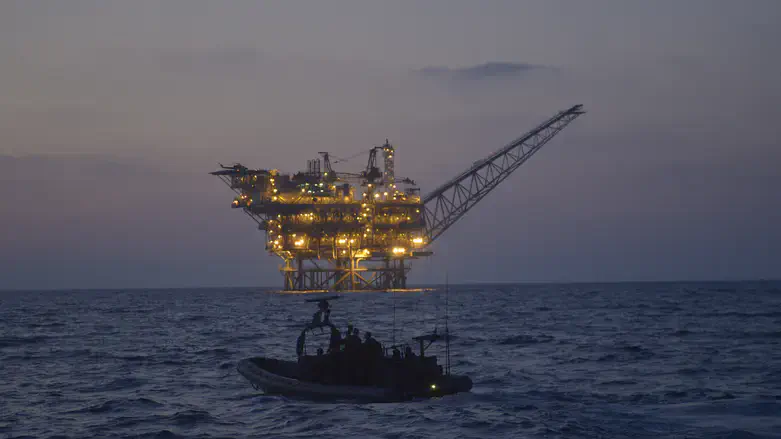
At 6:30 a.m., when the terrorist assault began, seven fast commando boats carrying approximately 45 terrorists departed from the Gaza coast. Each vessel had a different mission. Two were assigned to attack an Israeli offshore gas platform, others were tasked with striking EAPC facilities and other strategic infrastructure, while another boat reached Zikim Beach, where terrorists massacred civilians who had sought shelter in a bomb shelter and a public restroom.
"If the boats assigned to the gas platform had succeeded," Solomon said, "we would have faced an event on an entirely different scale. A successful strike on an active gas platform could have caused an enormous disaster."
He added that the threat did not end after the morning assault. During the afternoon, Hamas launched an unmanned explosive-laden submersable toward Israel, which was intercepted by the Israeli Navy.
"This is an incident that has barely been discussed," he said. "Had that submersable struck the gas platform, half of Ashkelon could have been vaporized. It was a great miracle."
However, Solomon's strongest criticism is directed at the investigations conducted after the war. He argues that they fail to present the full picture and place most of the responsibility on field commanders while minimizing the accountability of senior leadership.
As an example, he points to the case of Ashdod Naval Base commander Col. Eitan Paz. According to Solomon, at 4:30 a.m., Paz received an update from the commander of the Gaza Division regarding unusual signs that had accumulated overnight. At the same time, instructions were issued not to break routine or redeploy forces for fear that the enemy would detect unusual military preparations.
According to Solomon, Paz chose not to rely solely on those instructions. He contacted Navy Headquarters to verify the information and then independently raised the alert level. He called up reserve forces, deployed naval vessels to sea, strengthened security around strategic facilities, and personally returned to the base.
"These were tactical actions intended to balance the directive not to disrupt routine with the need to be prepared," Solomon said. "The forces had also conducted an exercise just one month earlier that simulated an infiltration by commando boats, so when the attack began, they knew exactly how to respond."
Despite this, Solomon says it was Paz who ultimately paid the price.
"The commander of Ashdod Naval Base left his position, while the entire chain of command above him remained in place. That's a question that needs to be asked."
Solomon further claims that the Israeli Navy had received unusual intelligence indications in the days leading up to the attack that were never passed on to the Ashdod base commander, and that additional information received during the night was not translated into appropriate operational preparations.
"What is no less serious than the failure itself," he said, "is the attempt to cover it up. Some of the information simply did not appear in the investigations. A narrative was created that shifts responsibility downward while protecting the senior command. In my view, that is one of the gravest problems."
According to Solomon, the review committee headed by Maj. Gen. (res.) Sami Turgeman sharply criticized the Navy's investigation and rejected it, along with several other core investigative reports, concluding that they did not meet the required professional standard.
Solomon concluded with a warning against drawing only partial lessons from the events.
"There are incidents the public knows nothing about," he said. "If we don't study them thoroughly and present the full picture, they could happen again. We must not cover things up. We have to understand what really happened in order to prevent the next disaster."