

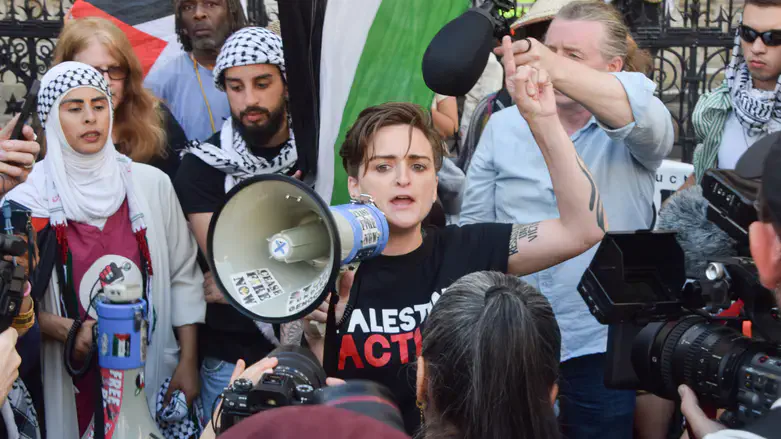
The UK Supreme Court has granted Palestine Action co-founder Huda Ammori permission to appeal the government's decision to proscribe the group as a terrorist organization.
According to court records published on Thursday, the appeal will move forward on the question of whether then-Home Secretary Yvette Cooper correctly applied government policy when banning the organization under the Terrorism Act 2000. The Supreme Court declined to hear arguments that the ban unlawfully interfered with freedom of speech and freedom of association.
The decision follows a June ruling by the Court of Appeal, which overturned an earlier High Court judgment and found that the government's decision to ban Palestine Action was lawful.
The Supreme Court has ordered that the case be expedited, with a hearing expected between October and December.
The court's decision came on the same day that 117 people were arrested outside Westminster Magistrates' Court during a protest in support of Palestine Action.
The Metropolitan Police said the majority of those arrested were detained for expressing support for a proscribed organization. Some additional arrests were made on suspicion of encouraging or assisting a criminal offense.
Hundreds of protesters gathered outside the courthouse, where more than 2,000 cases involving alleged support for Palestine Action had originally been scheduled to be heard. Those proceedings had been adjourned until October to await the outcome of the Supreme Court appeal.
During the demonstration, protesters chanted slogans including, "I oppose genocide, I support Palestine Action," while others shouted criticism at police as arrests were made. Organizers had planned a mock graduation ceremony, but police intervened after two people were arrested while assembling a small stage. The stage, certificates and other materials were confiscated.
Following the Supreme Court's decision, Ammori welcomed the ruling allowing the appeal to proceed and criticized the arrests, saying the proscription had become a means of suppressing expressions of support for Palestinians. She said the legal challenge would continue before the Supreme Court.
The government has maintained that the ban was based on Palestine Action's criminal activities rather than support for the Palestinian cause. Previous court rulings found that the group's activities included criminal offenses, although the High Court and Court of Appeal differed on whether those actions justified proscription under terrorism legislation.