

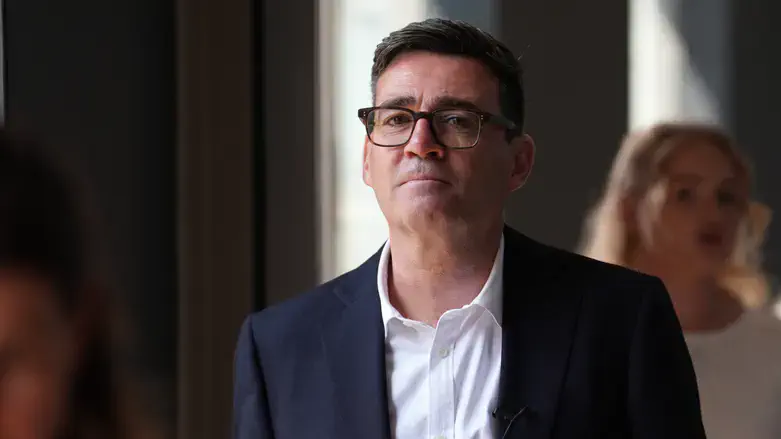
Andy Burnham was officially appointed Prime Minister of the United Kingdom on Monday after being invited by King Charles III to form a government, succeeding Keir Starmer following the latter's resignation.
Buckingham Palace confirmed that Burnham accepted the King's invitation after an audience at the palace, formally becoming Prime Minister and First Lord of the Treasury.
Before traveling to Buckingham Palace to tender his resignation, Starmer delivered his final address outside 10 Downing Street, thanking the British public and reflecting on his time in office. He said he was leaving with "good grace" and "a smile," adding that Britain was "stronger and fairer than it was two years ago." Starmer also praised the "resolve, grit, decency and compassion" shown by people across the country during his premiership.
Shortly afterward, Burnham arrived at Downing Street and delivered his first speech as Prime Minister, pledging to restore confidence in politics and improve living standards.
"We need a new national sense of unity," Burnham said, promising to place care for people at the center of government. He also said his administration would act as a "circuit breaker" to reform systems that he argued had failed for decades, while committing to tackling rough sleeping, increasing affordable housing, reforming mental health services and education, and unveiling further measures to address the cost of living.
Burnham acknowledged the frequency of changes in British leadership over the past decade, saying politicians "need to be better" and pledging to restore greater stability and public trust.
Burnham assumes office after winning the Labour Party leadership unopposed following growing pressure on Starmer to step aside. His appointment makes him the seventh British prime minister in the past decade. Cabinet appointments are expected later Monday.
Burnham's rise to power is expected to signal the further deterioration of UK-Israel ties. The new leader has previously indicated that his government would take a firmer approach toward Israel than his predecessor.
Earlier this month, Burnham apologized for what he described as Labour's initial response to Israel's military campaign in Gaza, saying, "My party didn't get it right, and I am sorry about that." He also pledged to consider additional sanctions against individuals and entities and to examine restrictions on trade involving goods from what he described as Israeli settlements.
At the same time, Burnham reiterated his condemnation of the October 7 Hamas massacre and said there was "no contradiction between a zero-tolerance approach to antisemitism and holding the Netanyahu government to account." He declined to characterize the war in Gaza as genocide, saying such a determination should be made by international courts rather than politicians.