

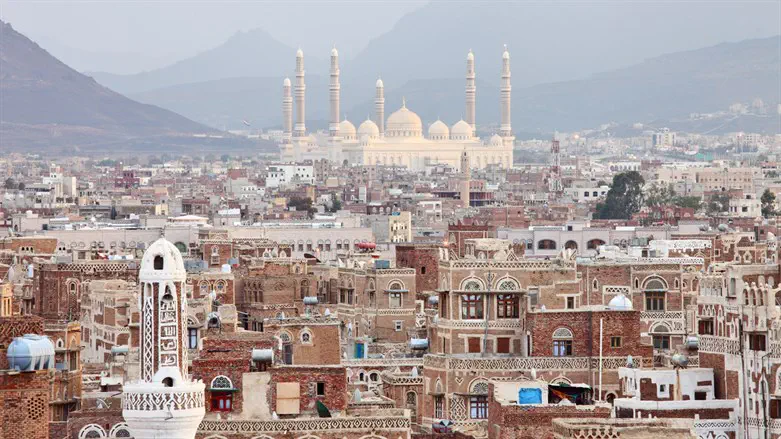
Saudi Arabia reportedly carried out airstrikes on Houthi-controlled Sana'a on Thursday, as regional tensions escalated following a series of attacks on the kingdom that Saudi officials say involved cooperation between Yemen's Houthi rebels and Iran-backed armed groups in Iraq.
Reuters reported earlier in the day that Saudi Arabia and regional partners have concluded that this week's attacks on the kingdom were launched from Iraqi territory by Houthi forces working alongside Iraqi armed factions aligned with Iran, highlighting what officials describe as increasing operational coordination among members of Iran's regional network.
The attacks included strikes on oil facilities in Saudi Arabia's Eastern Province, the country's main crude-producing region. On Wednesday, Saudi Arabia and the United States responded with joint airstrikes on sites in Iraq that Riyadh said were connected to the attacks, officially attributing responsibility to Iran-backed Iraqi armed groups. The Houthis, however, claimed responsibility for the attacks, while Iraq said it had opened an investigation.
Two regional officials told Reuters that some of the attacks originated in Iraq and were carried out jointly by Houthi fighters and Iraqi armed groups under the supervision of Iran's Islamic Revolutionary Guard Corps (IRGC).
Following the Saudi-US strikes, media affiliated with Iran-backed groups reported the deaths of IRGC members, Iraqi fighters and at least one Houthi operative.
Farea al-Muslimi, a research fellow at Chatham House's Middle East and North Africa program, said there is now direct coordination and training between members of the so-called Axis of Resistance, rather than solely through Iran.
Analysts cited by Reuters said the developments underscore Iraq's growing importance within the Iran-aligned alliance following the fall of Bashar al-Assad in Syria and the weakening of Hezbollah in Lebanon.
The governments of Saudi Arabia, Iran and Iraq did not respond to requests for comment. The Houthis have said their attacks on Saudi Arabia are retaliation for Saudi military operations in Yemen and are intended to end what they describe as a Saudi-imposed "siege." Saudi Arabia rejects that characterization, pointing to the continued arrival of ships at Houthi-controlled ports.
The Houthis and Iraqi armed groups have maintained ties for years, particularly with Kataib Hezbollah. In 2024, Houthi leader Abdul Malik al-Houthi announced the establishment of a joint operations room with Iraqi factions, and later that year the groups said they had carried out their first joint operation targeting Israel.
The Houthis also maintain an established presence in Iraq, including offices and an official representative who has publicly met with Iran-aligned Shi'ite political parties and armed factions.
According to Reuters, analysts say Iraq's large territory and lengthy, difficult-to-monitor border with Saudi Arabia make it an attractive location for launching cross-border attacks. Officials in Gulf states have previously blamed armed groups operating from Iraq for attacks targeting Saudi Arabia, Kuwait and the United Arab Emirates.
Iraq has repeatedly pledged to investigate allegations that attacks on neighboring countries originated from its territory, though critics argue it has struggled to curb the activities of armed factions, straining relations with Gulf states.
Iraqi Prime Minister Ali al-Zaidi canceled a planned visit to Saudi Arabia on Thursday following the Saudi strikes in Iraq. He has pledged to bring all weapons under state control by the end of September despite resistance from some armed groups.