

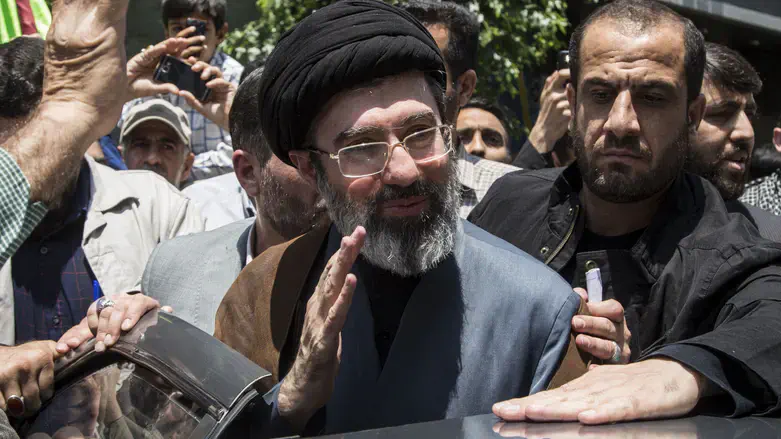
US intelligence briefings cited by The New York Times on Friday indicate that Iran’s new Supreme Leader, Ayatollah Mojtaba Khamenei, displays a far greater willingness to build nuclear weaponry than his father who preceded him.
His father, Ayatollah Ali Khamenei, who died in joint US-Israeli airstrikes during the opening phase of the war, had maintained a long-standing fatwa (religious decree) against weaponization. While American analysts previously maintained that Tehran sought the threshold capacity to assemble a device, many considered the former leader's religious reluctance genuine.
The younger Khamenei has avoided explicit public calls for a nuclear arsenal, noted The New York Times. Nevertheless, intelligence agencies assess that he and the hardline leadership that took power following the deaths of key Iranian figures harbour ambitions to produce sophisticated nuclear warheads.
The current administration in Tehran has already asserted stricter dominance over the Strait of Hormuz and proved unyielding at the negotiating table. Should the military campaign ultimately push Iran closer to building a bomb, it would represent a severe unintended consequence of the targeting of top leadership and the administration's early regime-change goals.
American officials quoted by The New York Times emphasize that much of the intelligence concerning Mojtaba Khamenei's views predates the current hostilities. Having sustained significant injuries in early strikes, the Supreme Leader has restricted his communications and public exposure to avoid being targeted. While he retains control over state affairs, analysts note he lacks the unassailable authority his father held over 36 years.
The intelligence findings arrive as President Donald Trump evaluates whether to broaden military operations against Iran. Evidence that the Iranian leader might favor weaponization offers potential justification for intensifying the campaign, noted The Times.
Although US sources confirm Tehran has not formally restarted its nuclear development, Iranian forces have taken measures to safeguard key infrastructure following American strikes on major sites last year.
Israeli tracking confirmed Iran relocated selected centrifuges to a fortified underground site in central Iran, labeled "Pickaxe Mountain" by US agencies. While this transfer could facilitate eventual enrichment efforts, officials believe the immediate objective is shielding equipment from aerial bombardment.
The subterranean facility at Pickaxe Mountain escaped damage during recent strikes and presents a far more formidable target. Buried far deeper beneath rock layers than previous sites, it remains shielded from standard conventional bunker-busters.
President Trump recently issued public warnings regarding the location, characterizing it as "a possible target for a nice big fat shot right in their front door."
He acknowledged, however, that US surveillance currently shows no active enrichment work underway at the site.
(Arutz Sheva-Israel National News' North American desk is keeping you updated until the start of Shabbat in New York. The time posted automatically on all Israel National News articles, however, is Israeli time.)