


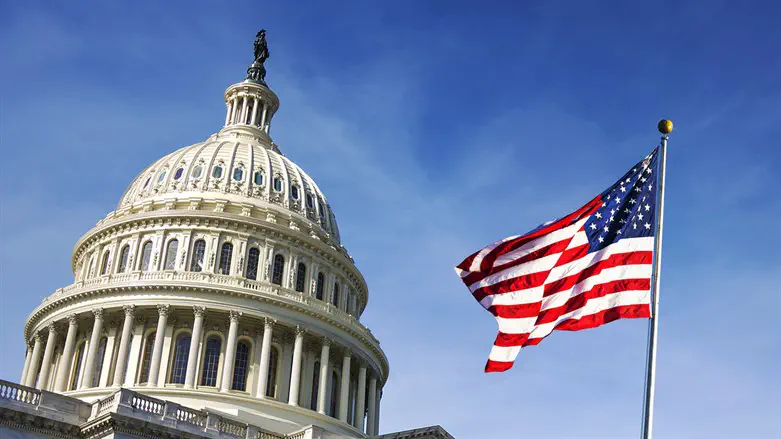
In a split display on Capitol Hill, the US House of Representatives on Thursday approved a nonbinding measure directing President Donald Trump to halt military operations against Iran, while a parallel attempt to pass a binding resolution failed in the Senate, NBC News reports.
The House measure passed 214-208, driven by unified Democrats alongside four Republicans who crossed party lines: Representatives Thomas Massie of Kentucky, Tom Barrett of Michigan, Warren Davidson of Ohio, and Brian Fitzpatrick of Pennsylvania. The vote marks a fresh effort by the chamber to order the withdrawal of American forces unless explicitly authorized by Congress.
Later that day, the Senate rejected a "joint resolution" in a 47-49 procedural vote. Unlike the House version, that measure carried the force of law - though it would have faced a likely presidential veto if passed.
Republican Senator Susan Collins of Maine supported the resolution alongside almost every Democrat, with Senator John Fetterman of Pennsylvania acting as the sole Democratic opponent. Four Republicans - Senators Katie Britt of Alabama, Mitch McConnell of Kentucky, Lisa Murkowski of Alaska, and Rand Paul of Kentucky - did not record votes.
The push was orchestrated by Democrats to force Republicans to take a formal stand on an increasingly unpopular war ahead of the upcoming midterm elections, while asserting legislative authority over war declarations.
While several Senate Republicans previously argued that military engagements exceeding 60 days require explicit congressional authorization under federal law, key members backed away from halting the campaign.
Despite similar leeway given to the White House by House Republican leadership, the passage of the House resolution underscores internal GOP friction and widespread public skepticism toward the conflict.
Seven Republicans and two Democrats did not vote on the House measure. The vote follows a similar war powers resolution passed by both chambers in early June. That approval followed three failed attempts by the House to pass a similar measure.