

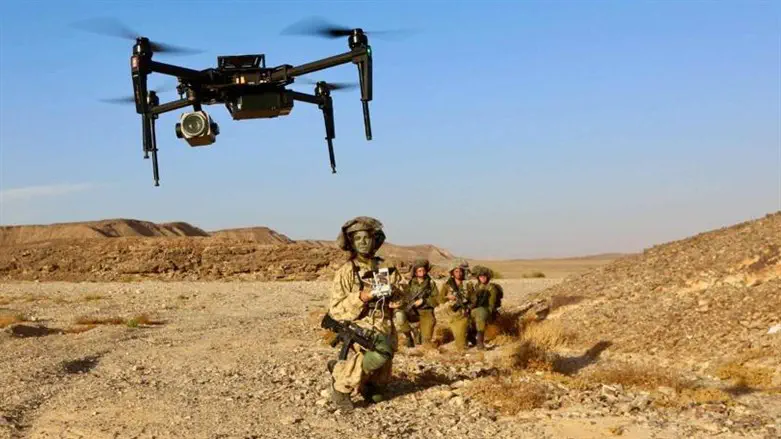
Israel's defense establishment is considering imposing broad restrictions on the use of civilian drones in Israeli airspace amid growing concerns over the expanding threat posed by Iran and its regional proxies.
The proposal is being examined as part of preparations for a range of security scenarios, after unmanned aerial vehicles have become one of the primary weapons used by the Iranian-led terror axis.
The issue has already been discussed by the Diplomatic-Security Cabinet, after defense officials presented ministers with an assessment of the drone threat and the operational challenges it poses. No final decision has yet been made, but defense officials are continuing to evaluate various options.
Security officials say one of the main challenges is the ability to detect and intercept small drones with a low radar signature in real time. Such drones can carry explosives or be used for intelligence gathering. Past experience has shown that Hezbollah, the Houthis, and other Iranian-backed terrorist groups have already employed such drones in attempts to attack IDF forces and strategic targets.
Israeli officials assess that in the event of a broader conflict, Iran could activate its proxies simultaneously from multiple fronts - including Lebanon, Syria, Yemen, and the Gaza Strip - in an effort to overwhelm Israel's air defense systems with a combination of missiles, rockets, and explosive drones. Israel is therefore working to adapt its defense strategy and prepare for smaller, harder-to-detect aerial threats.
The defense establishment is examining whether restricting civilian drone operations would help reduce opportunities for hostile actors and enable security forces to more quickly identify any unauthorized aircraft entering Israeli airspace. Such measures could also reduce the risk of civilian drones being exploited for espionage, intelligence gathering, or terrorist attacks.
At the same time, officials acknowledge that any such restrictions would affect a wide range of civilian drone operators, including photographers, media organizations, farmers, infrastructure companies, and licensed drone pilots. If approved, the policy is expected to include detailed regulations and a mechanism allowing essential operations to continue with authorization from the relevant authorities.