

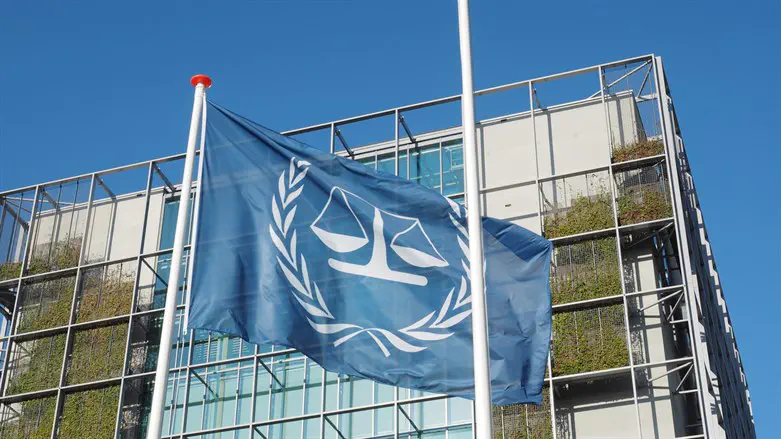
The United States announced Thursday it will completely reject extradition requests from the International Criminal Court (ICC) and freeze any domestic involvement in its ongoing inquiries.
The declaration came via an official letter sent by acting Attorney General Todd Blanche to the leadership of the Hague-based global tribunal.
In the letter, Blanche heavily criticized the court's recent actions, arguing it has systematically overstepped its intended boundaries.
"Notwithstanding these well-established principles, the ICC has acted in an increasingly lawless and illegitimate manner," Blanche wrote. "It has repeatedly asserted jurisdiction over non-consenting countries, disregarded its own complementarity requirement, and pursued investigations that appear driven as much by political pressure and institutional self-interest as by legal merit."
The US Department of Justice released a parallel statement reinforcing that the international tribunal holds absolute zero legal authority over American citizens, regardless of where they reside or travel globally.
Blanche defended the boycott by citing domestic law, arguing that the US Constitution exclusively gives judicial power to domestic courts. He asserted that American nationals should never be subjected to an unaccountable external panel, while also chiding the global body for unevenly applying its rules, a habit he claimed damages its institutional credibility.
The International Criminal Court did not immediately respond to inquiries seeking a formal statement regarding the American non-cooperation directive on Thursday.
The tensions between the US and the ICC are ongoing. Last year, the Trump administration imposed sanctions on four senior members of the ICC for their roles in pursuing cases against American and Israeli officials.
Washington enacted the restrictions to retaliate against the Hague-based war tribunal after it approved an arrest warrant for Prime Minister Benjamin Netanyahu, alongside an older, separate ICC investigation exploring suspected war crimes committed by American military personnel in Afghanistan.
Three of the ICC judges who were sanctioned launched a legal challenge against the sanctions in late June, asserting that the measures are fundamentally illegal.
The plaintiffs argue that the administration's punitive measures were deliberately engineered as an improper, extrajudicial campaign designed to penalize the bench and force compliance.