

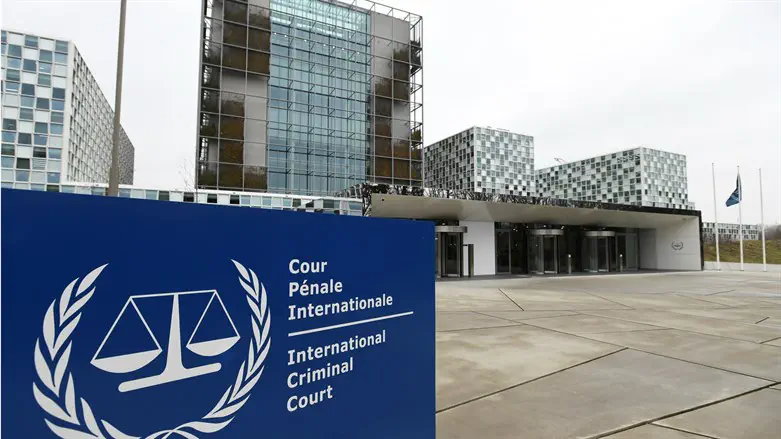
Three sitting jurists from the International Criminal Court (ICC) launched a legal challenge against US President Donald Trump and his administration on Wednesday, asserting that economic sanctions directed at them last year are fundamentally illegal, Reuters reported.
The lawsuit, submitted to a Manhattan federal court, was initiated by judges Kimberly Prost of Canada, Solomy Balungi Bossa of Uganda, and Reine Adelaide Sophie Alapini-Gansou of Benin.
The plaintiffs argue that the administration's punitive measures were deliberately engineered as an improper, extrajudicial campaign designed to penalize the bench and force compliance.
Requests for response from the White House, the Treasury Department, and the State Department yielded no initial comments.
The friction traces back to unprecedented sanctions authorized by the White House last year. Washington enacted the restrictions to retaliate against the Hague-based war tribunal after it approved an arrest warrant for Prime Minister Benjamin Netanyahu, alongside an older, separate ICC investigation exploring suspected war crimes committed by American military personnel in Afghanistan.
The financial penalties effectively paralyze an individual's day-to-day economic existence. Because global banking institutions must conform to American regulations if they utilize US dollar clearing systems or maintain operations inside the United States, targeted individuals are locked out of basic services.
The legal filing directly targets the statutory basis of the penalties, claiming the White House exceeded its legal boundaries under the International Emergency Economic Powers Act (IEEPA) because the court's actions do not constitute a legitimate or extraordinary national security emergency.
Furthermore, the jurists emphasized that the active restrictions completely block them from receiving vital arguments or reviewing evidence in current and future litigation pending before their respective panels.