

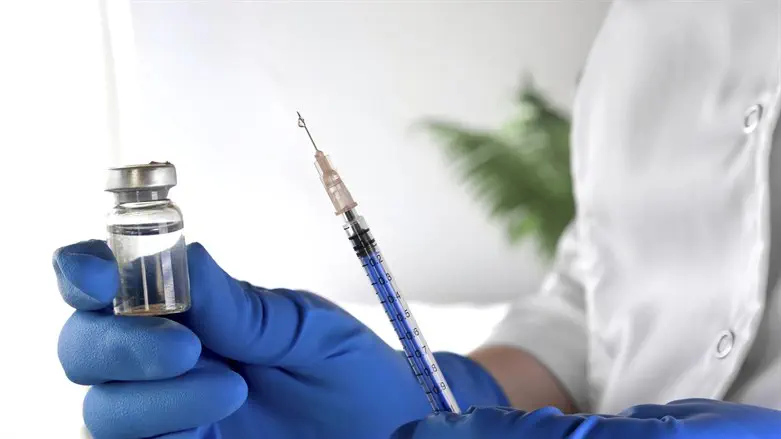
Israel's Health Ministry announced that beginning on Wednesday, July 1, 2026, the routine childhood immunization program will be updated.
The updates follow an extensive review by the Public Health Division and in line with vaccination schedules used in many developed countries,
Under the revised schedule, the second dose of the MMRV vaccine, which protects against measles, mumps, rubella, and chickenpox, will be administered at 18 months of age, instead of in the first grade.
The change applies to children born on or after January 1, 2025.
Bringing forward the second dose is expected to provide earlier protection against measles, improve individual immunity among infants and toddlers, and strengthen herd immunity.
The decision follows a comprehensive professional review conducted by the Health Ministry in response to recent measles outbreaks and recommendations from the national advisory committee on immunizations.
Until now, the second MMRV dose was administered through the School Health Services in first grade. Under the updated program, both doses will be given through Tipat Halav mother-and-child well-baby clinics: the first at 12 months and the second at 18 months.
As part of the revised vaccination schedule, the second dose of the hepatitis A vaccine will be moved to first grade to maintain the overall balance of the immunization program, in accordance with professional recommendations.
Prof. Siegal Sadetzki, head of the Health Ministry's Public Health Division, said, "The updates to the vaccination program and bringing forward the second doe of the MMRV vaccine to 18 months are an important step in adapting the best possible professional response for public health."
"This is a major medical news that will provide better and earlier protection for every infant. This step will significantly reduce illness and deaths caused by infectious vaccine-preventable diseases, and especially from measles. It is based on a professional recommendation that enjoys broad consensus among experts in Israel and around the world, as well as on experience accumulated in many countries. This measure is part of a comprehensive plan to increase childhood vaccination coverage while improving the availability and accessibility of vaccines for the entire population. The Health Ministry will continue working with all partners in the healthcare system to ensure the successful implementation of the program."
She added that the update is part of a broader effort to increase childhood vaccination coverage while improving vaccine accessibility for the entire population. The Health Ministry, she said, will continue working with healthcare providers to ensure the program is implemented successfully.