

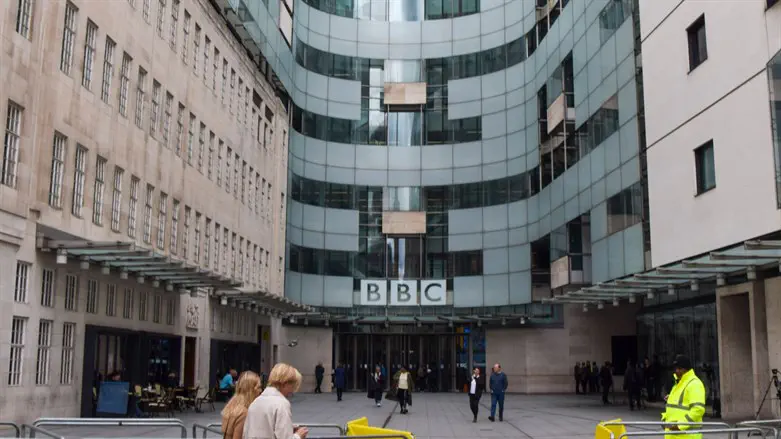
An employment tribunal has rejected an unfair dismissal claim brought by a former BBC broadcaster who was terminated after publicly reprimanding the network for its policy against calling Hamas a terrorist group, the Jewish Chronicle reported.
Sean McGinty, a veteran journalist with 22 years of service at BBC Radio Lancashire, was fired for gross misconduct in 2024. His termination followed a series of critical posts on social media regarding the network's editorial stances after the October 7 attack on Israel, as well as an aggressive email sent to former BBC 5Live presenter Nihal Arthanayake. In that message, McGinty branded Arthanayake “sociopathic".
McGinty, who has coped with childhood-diagnosed ADHD and severe anxiety, argued that his neurodiversity and mental health conditions directly fueled his behavior. He subsequently filed a discrimination and unfair dismissal lawsuit, but the panel ruled that his assertions were “not well-founded."
The controversy began when McGinty interacted with and amplified external posts on social media that lambasted the BBC's reporters and coverage of the Hamas massacre in Israel. In one October 2023 statement, McGinty claimed the broadcaster suffered from a “fear of the word terrorist," stating that Hamas was a “terrorist organization" responsible for “sadistic killings."
“That’s the word any decent person would use who’s bothered to look at the evidence," he added.
Although the UK government legally designates Hamas as a proscribed terrorist group, the BBC maintains a policy against utilizing the term. The corporation stated that McGinty violated its digital media code of conduct, which explicitly restricts personnel from compromising the network's neutrality or public standing.
Tensions escalated on October 16, 2023, after Arthanayake recommended that his followers read Nathan Thrall’s “A Day in the Life Of Abed Salama" and view the documentary “The Human Factor" to comprehend the historical backdrop of the violence.
McGinty responded with a scathing email, writing, “It is remarkable that you have the hubris to instruct me to read a book so I can find out why these animals are such murderous b-----ds… These are actions of evil monsters… It’s sociopathic of you to suggest anyone should read a book to seek context… I don’t look for context for disgusting excuses for human beings. “That being said, I am looking forward to your recommending books that give some context and understanding of Lucy Letby, Harold Shipman and the Yorkshire Ripper."
The BBC initiated a formal probe in late October 2023, after which McGinty took extended medical leave. He was ultimately dismissed in July 2024 following a disciplinary review. A subsequent internal appeal failed to overturn the verdict in February 2025, leading McGinty to sue for wrongful termination, disability discrimination, and a failure to provide reasonable workplace adjustments.
While the former radio host acknowledged sending the messages, he maintained that his anxiety and ADHD “caused him to express views that he would otherwise have kept private,"
However, the written ruling authorized by Employment Judge Dawn Shotter determined that "there was no causal connection between his disability and the gross misconduct Mr McGinty was accused of".
The tribunal deemed the corporation's decision fully justified under its strict neutrality guidelines, emphasizing that the broadcaster "could not have contentious and sensitive biased posts made public by a journalist who would continue to do so into the future because he was not accepting he was wrong, strongly holding personal views that overrode the BBC's restrictions on journalists".
The BBC has long come under fire for its bias against Israel and for its perceived backing of terrorism.
In November of 2023, the corporation published an apology after falsely claiming that IDF troops were targeting medical teams in battles in and around the Shifa Hospital in Gaza.
Before that, the BBC falsely accused Israel of being responsible for an explosion at a hospital in Gaza, which the IDF proved was caused by an Islamic Jihad rocket. The network later acknowledged that “it was false to speculate" on the explosion.
Last year, the BBC faced mounting scrutiny for using the son of a senior Hamas official as a narrator in its documentary “Gaza: How to Survive a Warzone."
Following the criticism, the British broadcaster acknowledged that there were “serious flaws" in the program.