

An official military document has revealed for the first time the planning principles, core assumptions, and numerical data behind the operations of Israel’s Home Front Command during Operation “Roaring Lion."
The documents point to a deep strategic shift, moving the command away from a traditional defensive approach toward managing an “active home front," based on the understanding that civilian areas and critical national infrastructure are now primary enemy targets.
The updated strategic concept is built on the principle that “Iran is here" - meaning the confrontation with Tehran now directly affects Israel’s home front and is no longer confined to a distant battlefield.
Operational planning for the campaign was based on five central assumptions, foremost among them preparedness for a prolonged threat from multiple arenas simultaneously - Iran, Lebanon, and Yemen - managing extensive operational burdens, and maintaining a high degree of operational secrecy, even at the cost of reducing visible preparations in civilian areas.
Home Front Command officials emphasized: “We are fully aware of the situation and remain at full readiness across all sectors, understanding that the home front must adapt rapidly to a changing reality."
The transition from Operation “Rising Lion" to Operation “Roaring Lion" was characterized by stronger inter-service and inter-agency cooperation with IDF units and emergency organizations. Operational systems were adapted for a multi-front scenario, including streamlined information flow from the tactical level to the General Staff for real-time decision-making, and improved preparedness among local authorities for emergency management.
As part of the operation, extensive infrastructure efforts were also invested in northern Israel under the “Lion of the North" program, focused on strengthening civilian assistance and protection for residents.
“We concentrated efforts on fortification measures, shelter renovations, deployment of portable bomb shelters, and improving preparedness among local authorities, out of commitment to strengthening residents’ security," the document states. “Home Front Command came into the operation prepared. We are using the current period to learn lessons, conduct reviews, and prepare better for what lies ahead."
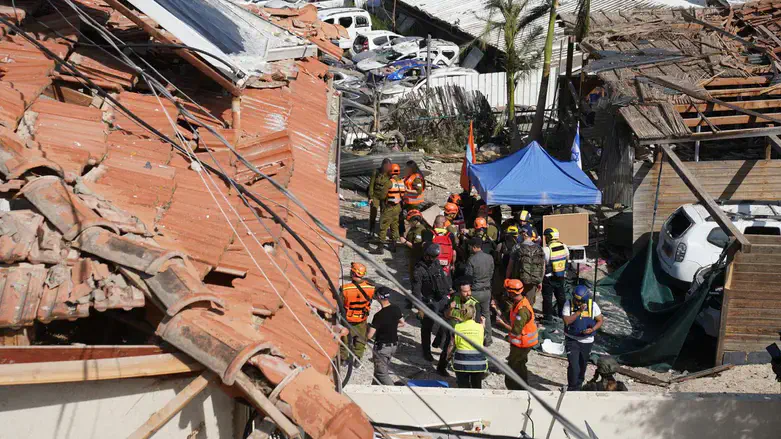
The official figures reveal the scope of the fighting and the civilian response effort: Home Front Command forces responded to approximately 1,200 incidents related to the Iranian front, alongside about 100 incidents connected to the Lebanese front.
Forces handled around 25 major destruction sites across the country. At the same time, approximately 150 deployment points were established throughout civilian areas, while about 865 female soldier-instructors operated in the field to strengthen civilian resilience.
As part of the engineering and protection effort, around 130 shelters were renovated - 110 of them in northern Israel. In addition, roughly 755 portable bomb shelters were deployed nationwide, with more than half of them (373 shelters) placed in northern communities under threat.
The command concluded the report by stressing that “saving lives is the supreme value guiding us."
“Throughout the operation, Home Front Command forces mobilized and arrived within minutes at the various scenes, out of a commitment to act quickly, decisively, and professionally wherever a response was needed."