
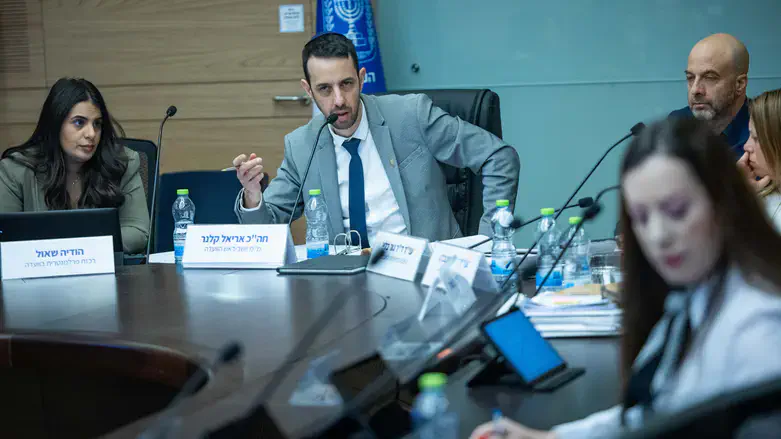
The Knesset Constitution Committee convened today (Wednesday) to discuss a bill proposed by MK Ariel Kallner seeking to establish an inquiry committee into the October 7 massacre.
A draft version distributed to Knesset members reveals several significant changes from the original proposal. Most notably, the phrase stating that the committee’s goal was “to ensure that a full, thorough and independent investigation will take place" was removed. In its place, the revised text says the committee’s purpose is “to bring about an investigation of the events of the October 7 massacre."
Under the updated wording, the committee is designed to address the public dispute surrounding the question of the appointing authority, with members to be selected either by consensus or through equal representation of coalition and opposition lawmakers.
The “October Council" sharply criticized the amendments, saying: “The cat is out of the bag. Even in its original form, the bill for a political cover-up committee was riddled with flaws, many of which were raised repeatedly by the Constitution Committee’s legal adviser during the discussions."
The debate comes after the Israeli Supreme Court gave the government until July 1 to present a plan for investigating the massacre. The justices ruled that the court has the authority, in principle, to intervene in the issue and potentially order the establishment of a state commission of inquiry.
Following the criticism, MK Kallner clarified that the disputed wording had not been intentionally removed.
“The words were not deleted deliberately," he said. “It was a drafting mistake that occurred in a version I edited and circulated. The revised wording is meant to clarify the bill’s purpose, which is to address the public dispute over the composition of the committee."
Kallner insisted the proposed body would still conduct “a thorough, independent and autonomous investigation," adding that the legislation is specifically designed to prevent any whitewashing of events.
According to Kallner, the bill would grant any two members of the committee the authority to summon witnesses and open investigative channels, while proceedings would be overseen by representatives of bereaved families and broadcast live to the public.