

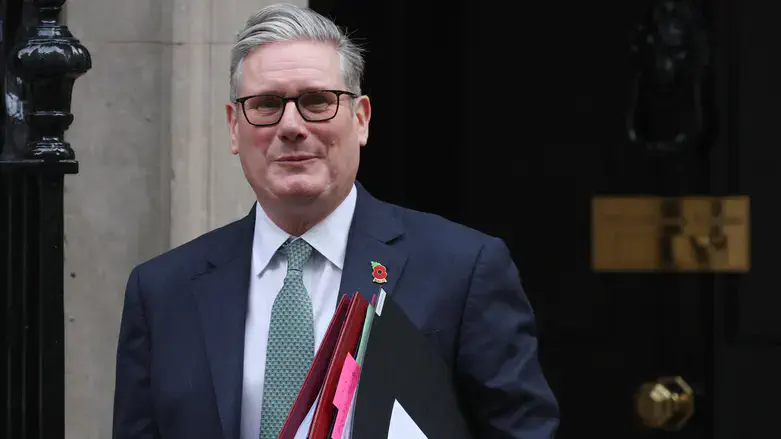
Prime Minister Keir Starmer addressed the No10 Tackling Antisemitism Forum on Tuesday, May 5, 2026, warning that rising antisemitism in the UK represents a broader national crisis that demands urgent and coordinated action.
Opening the forum, the Prime Minister thanked participants for attending and praised testimony shared by Jewish community representatives, calling it “powerful, honest and courageous." He said their accounts highlighted “what it feels like to be Jewish in Britain right now."
Referring to recent violent incidents, including terrorist attacks in Heaton Park, Manchester, last October and in Golders Green, London, last week, Starmer said they were part of “a pattern of rising antisemitism" leaving Jewish communities “frightened, angry, and questioning whether their home is safe."
He stressed that antisemitic attacks against British Jews represent a challenge to the country as a whole, adding that the issue is “a test of our values," which he said must be upheld through action rather than words alone.
“It is not enough to simply say we stand with Jewish communities. We must show it through action," he said, adding that responsibility lies “with each and every one of us."
Starmer outlined a series of government measures aimed at addressing both security needs and the underlying causes of antisemitism. He confirmed an additional £25 million in funding to strengthen security at synagogues, schools, and community centres, including increased police patrols and the deployment of specialist officers.
While describing these steps as necessary, he acknowledged it was “a sad reality" that such protections were required.
Beyond immediate security, the Prime Minister said the government is also working to confront extremism and hate speech at its source. He said authorities are examining whether foreign states may have been involved in some incidents and warned that any such activity “will have consequences."
He added that extremism from Islamist, far-left, and far-right sources is being addressed under a coordinated national plan aimed at improving community cohesion and countering radicalisation.
Additional measures announced include stronger powers for regulators and technology companies to remove extremist content, faster sentencing for related offences, and enhanced authority for the Charity Commission to act against organisations linked to hate activity.
Starmer also highlighted steps in education and public services, including antisemitism training across the NHS, dedicated funding for schools and universities, and mandatory Holocaust education in schools. Universities, he said, will be required to publish data on antisemitic incidents on campus and detail their enforcement actions.
In the cultural sector, he said public bodies such as the Arts Council would be expected to take firm action against institutions that allow antisemitism, including suspension or withdrawal of funding where necessary. He also announced an independent audit into how allegations of antisemitism are handled.
Concluding his remarks, Starmer called on leaders across society to take responsibility in their own sectors, warning that antisemitism often begins with “ideas, misinformation, and conspiracy theories" before escalating into violence.
“Stopping antisemitism is not someone else’s responsibility. It is all of ours," he said, urging urgent and practical action to ensure Jewish communities in the UK can live without fear.